
Last updated November 15, 2026
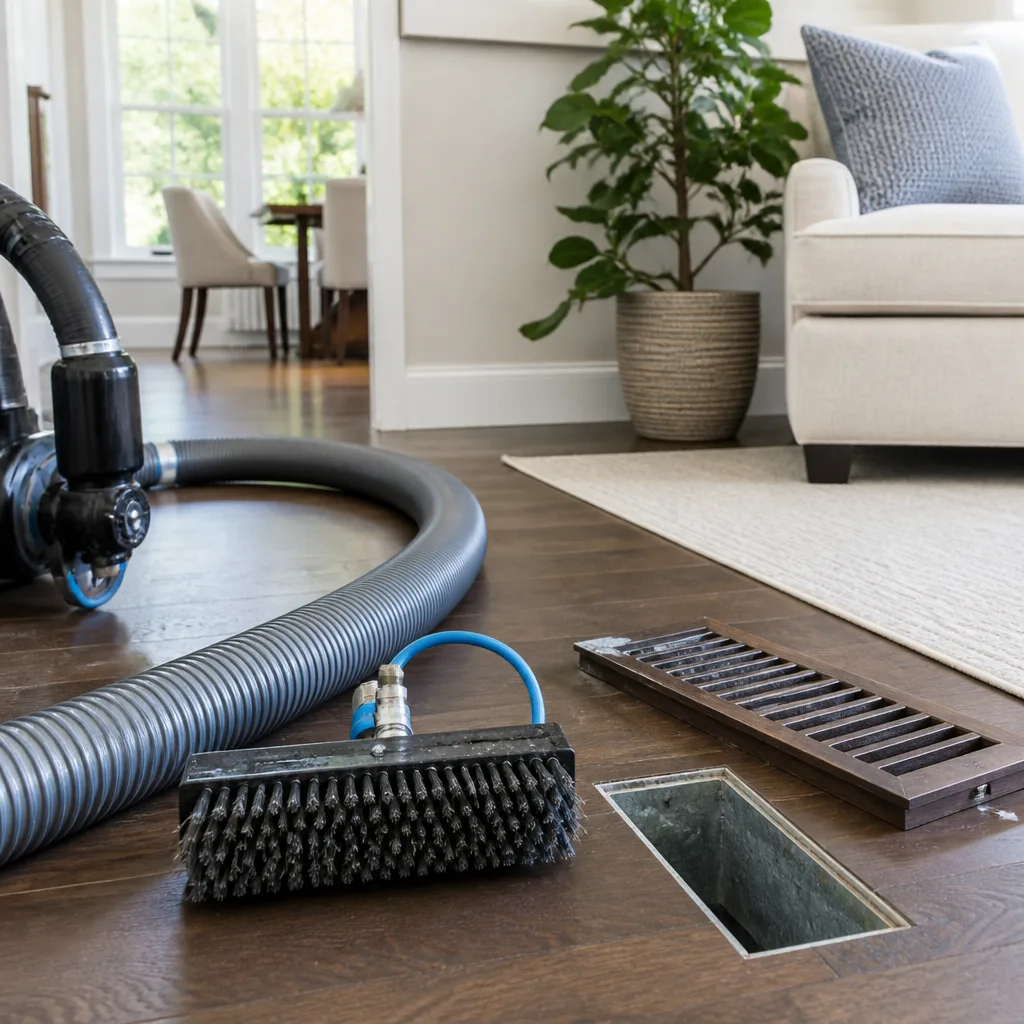 Whole-home duct cleaning
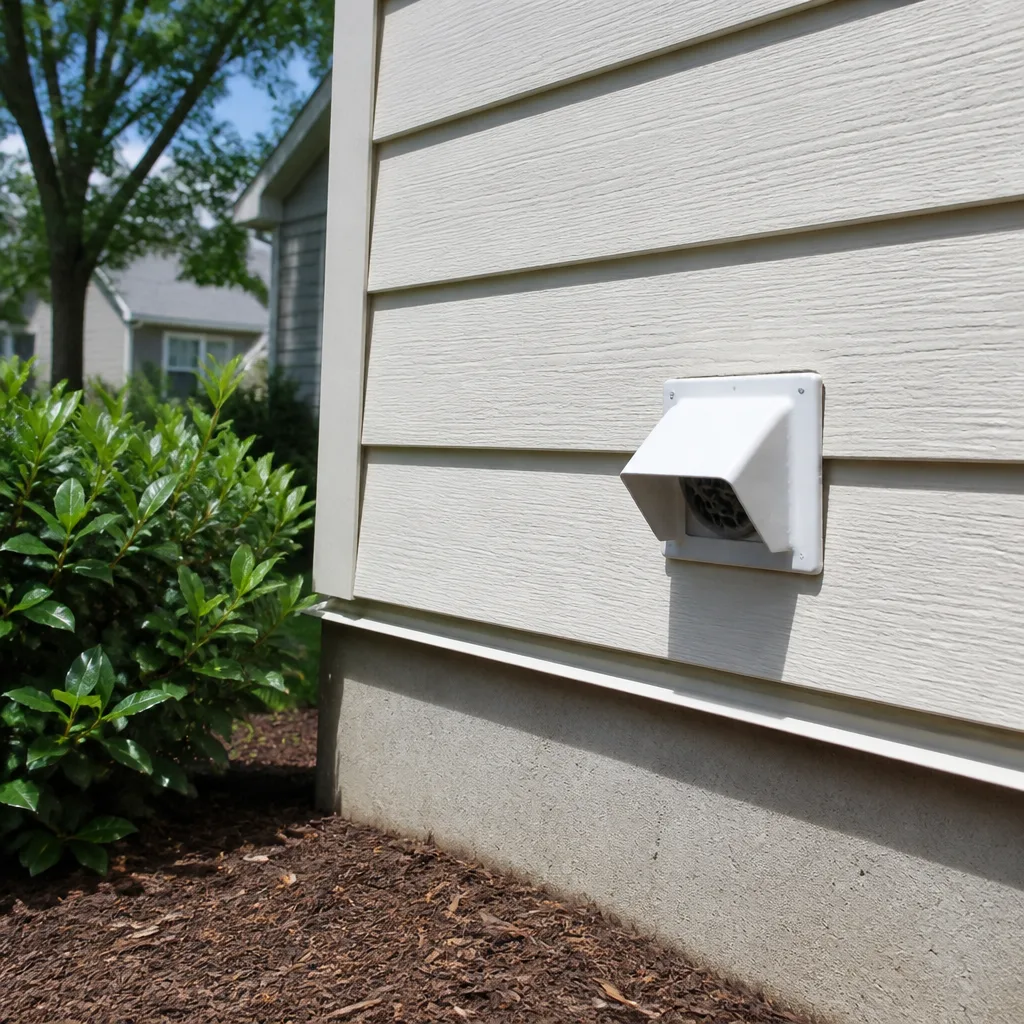 Dryer vent cleaning
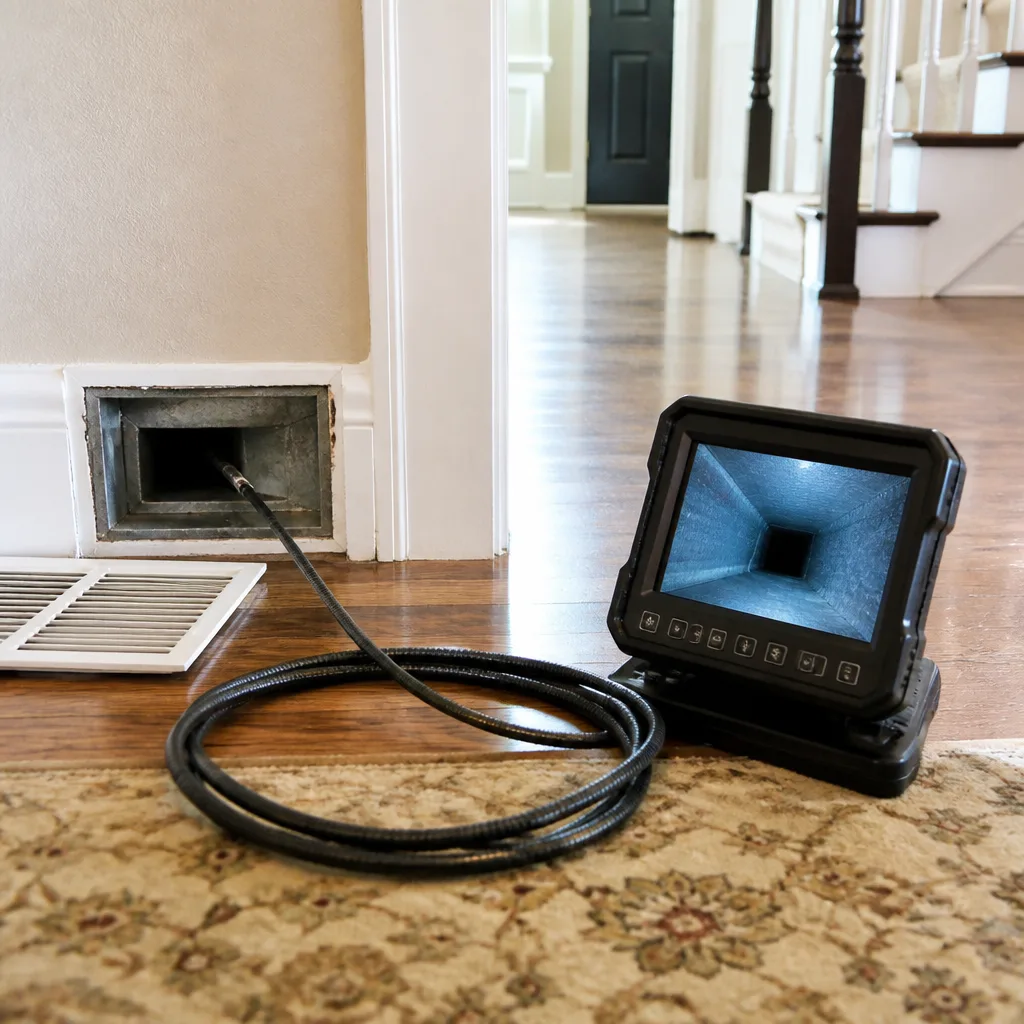 Camera inspection
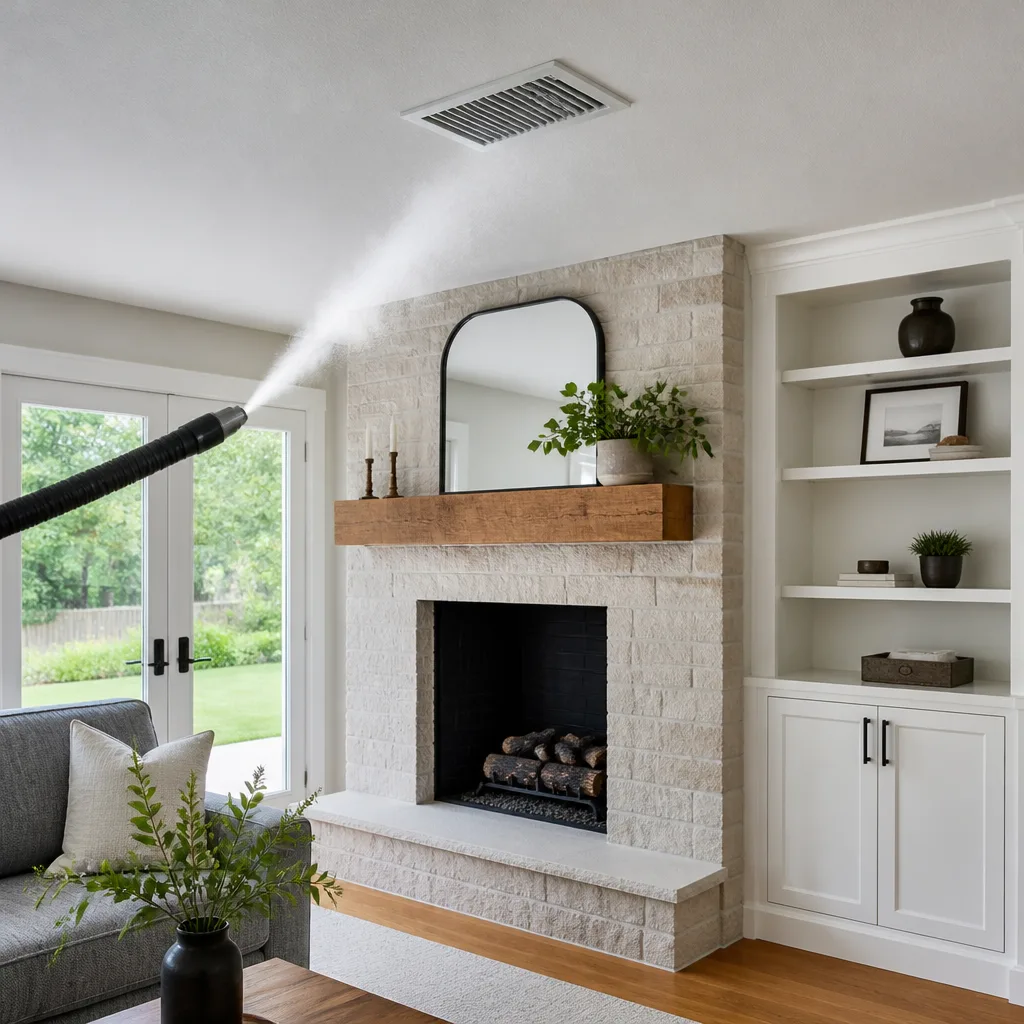 Sanitizing & deodorizing
Whole-system duct and dryer vent check with before-and-after photos - you see exactly what came out of your vents
That "$99 whole-house special" is a bait ad - the real number appears once they are in your hallway, or the "clean" is a shop-vac at the register. We photograph the inside of your ducts before and after instead.
Air Duct Cleaning Emergency Preparedness Guide for Yuma Homes
During a haboob, closing the windows keeps the visible dust out. But if your HVAC is running with a fresh-air intake open or a return seal that has pulled loose, the duct system is pulling outdoor particulate into the house at 400 to 1,200 cubic feet per minute while you believe you are sealed in. That gap between what a homeowner assumes and what the ducts actually do is what this guide is about. Yuma throws a specific set of hazards at a house in a single year: blowing dust in summer, monsoon rain that arrives faster than the ground can absorb it, wildfire smoke drifting in from California and Mexico, and grid outages on the hottest afternoons. Each one asks something different of your duct system, and the wrong response to one can worsen the damage from another. Below we walk through the response for each event, how to assess what your ducts took on, and how to build a small duct-specific kit so you are not improvising at the hardware store with the power out.
Quick Answer
Air duct emergency preparedness in Yuma means matching a specific response to a specific event: shutting the HVAC or capping intakes before a haboob, evaluating moisture inside duct runs after monsoon flooding, upgrading filtration and managing system runtime during wildfire smoke, and checking condensate pans and duct interiors after an extended power outage. The single most useful step is knowing which of those four events you are dealing with before you touch the thermostat, because running the system at the wrong moment pushes contamination through the house instead of keeping it out.
Styles & brands we work with
- Whole-home duct cleaning
- Dryer vent cleaning
- Camera inspection
- Sanitizing & deodorizing
Table of Contents
- Haboob response: what to do with the HVAC when the dust arrives
- Post-flood duct assessment: moisture, attic runs, and when cleaning is not enough
- Wildfire smoke events: filtration, runtime, and temporarily sealing returns
- Power outage recovery: condensate pans, humidity, and duct contamination
- Building a duct-specific emergency kit for a Yuma home
- How to assess your duct system before the next event
- When emergency exposure turns into duct repair
- What professional equipment actually does that a shop vacuum cannot
Haboob Response: What to Do With the HVAC When the Dust Arrives
A haboob is a wall of wind-driven dust that can arrive with little notice during Yuma’s summer monsoon season. Closing the windows is the obvious step and the one most households get right. The less obvious question is whether the HVAC should keep running. The answer depends on how your system is configured and how tight the return side is.
Here is the sequence we recommend working through when the dust front is visible on the horizon:
- Switch the system off at the thermostat before the front hits. A running air handler pulls air through the return regardless of what the windows are doing. If there is any leakage in the return path, or an outside-air intake tied into the system, that running fan is a delivery channel for dust.
- Confirm whether your system has a fresh-air intake. Some homes in Yuma have a dedicated outside-air duct tied into the return plenum. If yours does, you need to know where that termination sits on the exterior wall and whether it has a damper or cap you can close.
- Close the intake at the exterior if you can. A capped or dampered intake keeps the duct from becoming a dust scoop while the wind is up.
- Leave the system off until the visible dust has settled. Running it during the event with a loaded filter just packs the filter and starves airflow. Waiting costs you a bit of cooling; running costs you filter life and pushes fine particulate into the supply trunks.
- Replace the filter immediately after the event. Not the next weekend. The filter that loaded during the storm has done its job, and leaving it in place restricts airflow and lets the blower pull past the loaded media.
After the dust clears, walk the exterior of the house and look at where the duct system meets the outdoors. Any termination for a fresh-air intake, any exterior vent cap, and the sealant around them are the points where dust finds its way in. Loose caps and cracked sealant are cheap to fix and worth checking every season in a place where dust storms are a routine part of the summer.
If the storm was severe, or if the house filled with dust despite your best efforts, a professional inspection of the return side is worth the call. The Duct Cleaning Yuma team can assess how much material made it into the system and whether a full clean is warranted.
Post-Flood Duct Assessment: Moisture, Attic Runs, and When Cleaning Is Not Enough
Monsoon rain in Yuma can drop a season’s worth of water in an afternoon, and the ground here does not absorb it the way a wetter climate would. Water finds low points, and in a house with duct runs in the attic or buried under slab, those low points can be inside the ductwork or against its exterior.
What moisture intrusion actually looks like in a duct system is rarely a puddle on the floor of the living room. It is more often one of these:
- Water staining or a tide line on the exterior insulation wrap of attic duct runs, particularly at low sagging sections between hangers.
- Compressed or saturated insulation on flex duct, which collapses the inner liner and restricts airflow even after the wrap dries.
- Visible standing water or mud inside a return plenum or at the bottom of an air handler cabinet.
- A musty odor from supply registers that persists after the weather dries out. The odor is the signal; the moisture source behind it may already be gone.
- Rust at metal duct seams, joints, or the boot connections at the floor registers.
Here is the part homeowners most often get wrong: cleaning is not remediation. If a duct run took on water, the interior liner may be harboring moisture and biological growth, and simply running a rotary brush through it agitates what is there without addressing the underlying condition. In a flooded attic run, the correct sequence is often to remove and replace the affected section of duct, not to clean it in place. Cleaning a duct that is saturated or that has compromised insulation is work done on a failed component.
We clean ducts, and we repair ducts. That distinction matters here, because a cleaning-only contractor will identify the wet run and hand you a phone number for someone else. If the assessment turns up water damage, collapsed inner liner, or a run that needs to come out, we can handle both the removal and the replacement as part of the same job.
After any flooding event, the practical order of operations is: stop running the system, get the attic or crawlspace dry, assess the duct runs for moisture and physical damage, then decide between cleaning and replacement based on what the assessment actually shows. A moisture meter on the duct wrap is a more reliable answer than a visual glance.
Wildfire Smoke Events: Filtration, Runtime, and Temporarily Sealing Returns
Yuma sits where fire seasons from California and Mexico can push smoke into the region during the summer months. Smoke events here are not necessarily local fires. They are the drift of particulate from hundreds of miles away, arriving as a visible haze and a smell that settles into the house. For a homeowner with asthma, young children, or an older family member, this is where duct system decisions carry real weight.
The filtration question comes down to MERV rating. A standard filter in the MERV 8 range catches larger particulate and will help with visible smoke ash, but fine smoke particles are smaller and require a higher rating to capture meaningfully. A MERV 13 filter is often the practical ceiling for a residential system that was not designed around a high-pressure-drop filter. Going higher than the system can handle costs you airflow, strains the blower, and can freeze a coil in the worst case. The right answer is to check what your system is rated for before the smoke arrives, not during the event.
During a smoke event, our guidance for the runtime decision:
- Keep windows and doors closed. This is obvious and still the most important single step.
- Run the system on continuous fan, not auto. Continuous fan keeps air moving through the filter and lets the filter do its job on the interior air rather than only when the thermostat calls for cooling.
- Check the filter once a week during a sustained event. A loaded filter stops filtering. In heavy smoke, filter replacement intervals compress significantly.
- Temporarily seal the return if you have a fresh-air intake. A temporary block over the intake filter grille for the duration of the event, removed afterward, prevents the system from drawing outdoor smoke into the return and pushing it through the supply side. Note that you must remember to remove it. A sealed intake that stays sealed deprives the system of necessary makeup air and can create pressure problems.
- Consider a higher-MERV staged filter before the season, not mid-event. If you are running a standard filter, having a MERV 13 sized correctly and ready to install is the preparedness move.
After a smoke event, filter replacement is not optional. The filter that caught a week of smoke is full. Once the air clears, a professional duct cleaning is worth considering if the smoke has been heavy or sustained, since fine particulate can settle into the return trunks and the supply boots where a filter cannot reach.
We work with air duct cleaning customers on filtration upgrades using Honeywell and Aprilaire products, so the MERV decision can be made against what your specific cabinet will accept. That is a conversation to have before the next smoke event, not after.
Power Outage Recovery: Condensate Pans, Humidity, and Duct Contamination
An extended summer outage in Yuma is a specific problem: the house heats up, the humidity inside climbs as occupants sweat and breathe, and the air conditioning system is off. When power comes back, most people walk to the thermostat and turn the system on without looking at the air handler first.
Here is what an extended outage does to a duct system. A condensate drain pan under the indoor coil collects the water the coil sheds during normal operation. During a long outage, the coil warms up, the pan that was cool now sits in hot humid air, and if the drain line is partially blocked or the pan has any standing water in it, conditions inside the air handler cabinet become favorable for biological growth. When the system restarts, that growth releases spores into the supply side. The ducts downstream of the air handler are now carrying what grew in the cabinet.
The recovery sequence we recommend after any extended outage:
- Before restarting, look at the air handler cabinet and the condensate pan. Any standing water, visible growth, or a drain pan that is not draining is a stop-and-address condition. Do not run the system until the pan is drained and the drain line is confirmed clear.
- Check the drain line for blockage. In Yuma, dust and mineral deposits can accumulate in a partially clogged drain line, and the heat from a long outage can make the resulting backup worse. The float switch, if there is one, is what you want to confirm is functioning.
- Inspect the filter and replace if it was loaded before the outage. Restarting on a loaded filter is a strain on the blower, not a saving.
- Run the fan briefly on its own before turning on cooling. This lets you hear the blower and check for unusual noise or smell before the compressor starts.
- If the house smells musty after restart, have the system assessed. The problem may be in the ducts, or it may be localized to the air handler and coil, and those are different fixes.
A power outage is a small event compared to a haboob or a flood, but it is the most common one, and it is the one most likely to cause a duct contamination problem quietly. If your home lost power for a day or more in a hot summer, it is worth a look at the air handler before you run the system again.
Building a Duct-Specific Emergency Kit for a Yuma Home
A duct emergency kit is small and cheap to assemble, and it saves you from improvising when the power is already out or the dust is already flying. Ours fits in a shoebox.
- Two spare filters at the correct size and MERV rating. Correct size matters more than any other variable. Measure the filter slot or read the existing filter, and keep two on hand. One to swap out mid-event if needed, one as backup.
- A MERV 13 filter, if your system is rated for it, staged for smoke events. Do not run a MERV 13 year-round if your system is not designed for the pressure drop. Run it for the event and switch back.
- Exterior vent caps sized for your fresh-air intake and dryer vent. Storm winds can lose a cap or a dryer vent hood. Having the correct size on hand means you can close an opening in minutes instead of leaving it open for a week.
- A roll of foil tape (not duct tape). Foil tape is the right product for temporary sealing of a duct seam, an intake grille, or a breach in the exterior run. Duct tape fails in heat and leaves adhesive residue that makes a permanent repair harder.
- A flashlight and a pair of nitrile gloves. For checking the air handler and filter slot without getting skin oils onto the filter media.
- A marker and a note. Write down the filter size and the MERV rating your system is rated for, and tape it inside the air handler cabinet door. This is the single most useful preparedness item for the next person in your family to change the filter.
Build the kit before the season. Yuma’s dust storms, monsoon rain, and smoke events arrive on their own schedule, and the hardware store on the day of a dust event is not a useful plan.
How to Assess Your Duct System Before the Next Event
Preparedness works best in dry weather, when you can inspect the system without an event forcing the pace. Here is what to check on a normal day in Yuma, before any of the events above.
- Find every exterior termination on the duct system. Fresh-air intake, dryer vent, and any exhaust runs connected to the HVAC. Know where they are and what condition the caps or dampers are in.
- Check the return air seal at the air handler. The panel that covers the filter slot and the return plenum connection are the most common leak points. A gap at the return, at 800 CFM of system airflow, is a direct path from indoors to outdoors and back.
- Walk the attic duct runs. Look for sagging flex duct, disconnected joints, torn outer wrap, or compression under stored items or insulation batts. Compression at a sag kills airflow and creates a low spot where dust settles.
- Look at the condition of the supply boots at the floor registers. A boot that has separated from the subfloor is a hole in the duct system, and it is often the reason one room runs hotter than the others.
- Record your filter size and the rated MERV range for your system. Tape it inside the cabinet door.
If you find a disconnected joint, a collapsed run, or a duct that has come apart at a boot, that is a repair, and it is worth addressing before the next event. A duct that is already compromised will not benefit from being cleaned. Yuma has plenty of homes with older duct systems where a repair or a partial replacement is the honest answer rather than a cleaning.
If the assessment shows the system is intact but loaded with dust, dirt, or debris from a previous season’s storms, that is where a full cleaning starts.
When Emergency Exposure Turns Into Duct Repair
Not every emergency exposure requires repair, and not every exposure that requires cleaning will repair the duct system. The distinction is worth knowing before you call anyone, because a cleaning-only contractor stops at the point where repair starts.
Here is what we are checking for when we assess a duct system after an event:
- Physical separation. A joint that has come apart, a boot that has separated from the floor, or a flex run that has pulled off its fitting. This is a repair, not a cleaning.
- Collapsed inner liner. Common in older flex duct after wind-driven exposure or after a run has been crushed. The duct looks fine from outside, but airflow is restricted. Repair or replacement is the answer.
- Moisture damage from a flood event. Saturated insulation, a tide line, or a compromised liner. Replacement of the affected section is the honest answer.
- Rusted metal at seams. A sign that moisture has been present, and worth addressing at the same time as the cleaning so the duct does not re-contaminate.
We repair ducts as part of the same visit as a cleaning where it makes sense, which means you are not scheduling one contractor to clean and another to fix. That matters most in the days after an event, when the household has already been disrupted and a second appointment is a second disruption.
What Professional Equipment Actually Does That a Shop Vacuum Cannot
The single most common mistake we see is a homeowner who pulls out the wet/dry shop vacuum to “clean the ducts” after a dust event. This does not clean the ducts, and in some cases it makes things worse by stirring settled debris into the supply side.
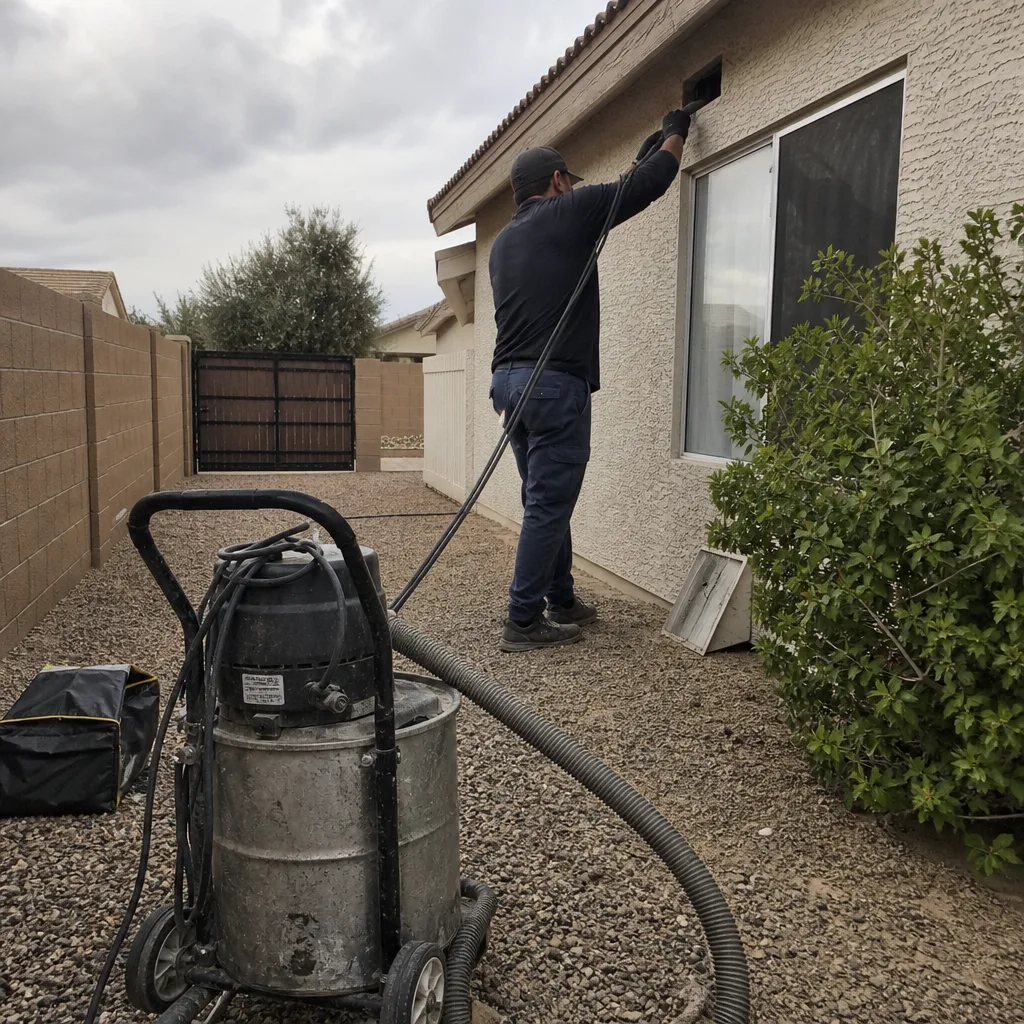
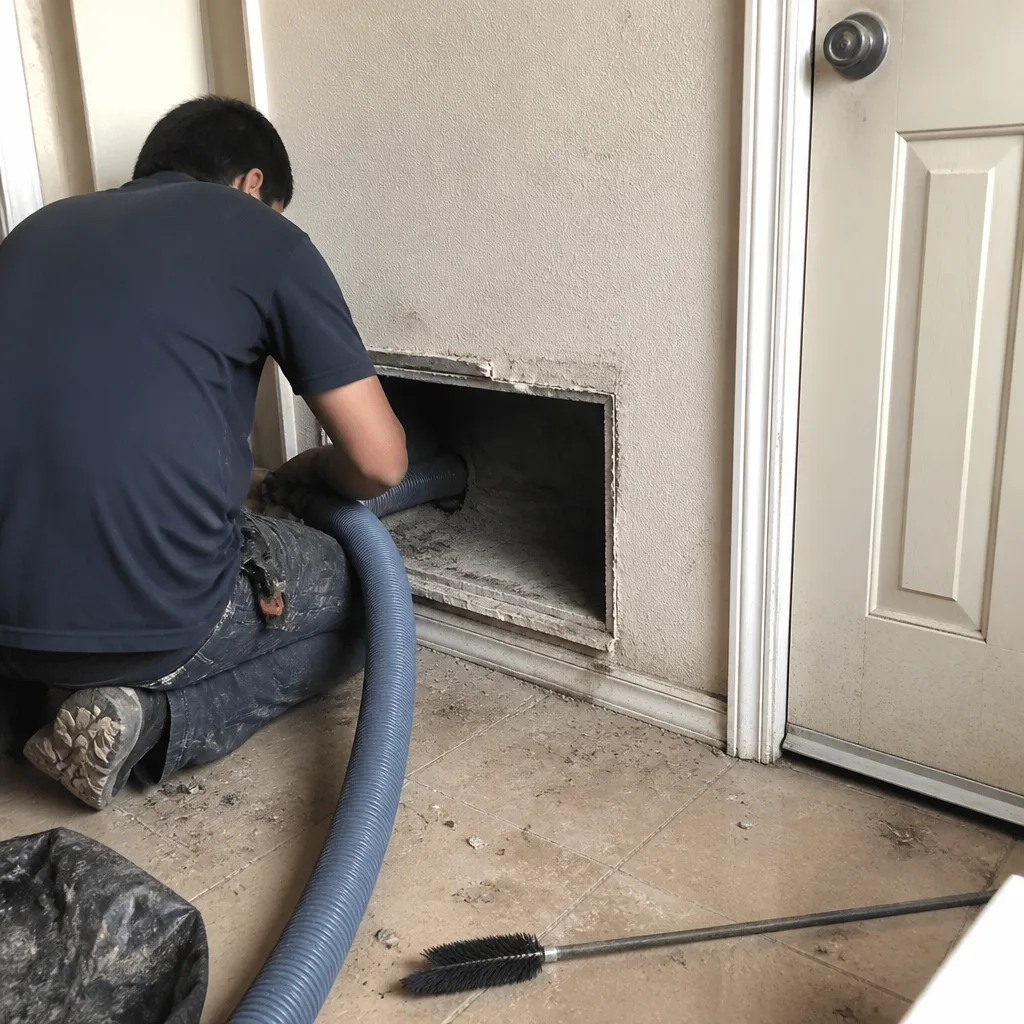
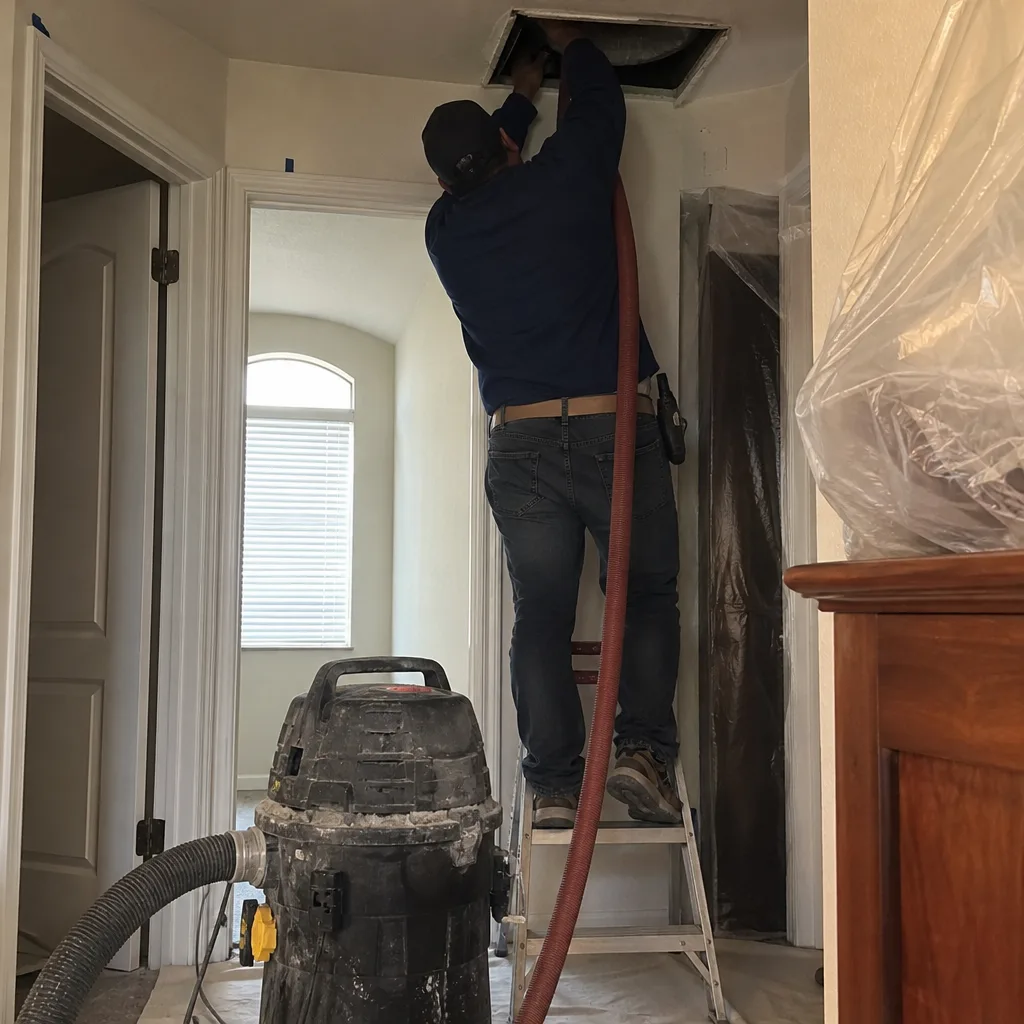
Cleaning a duct system properly requires two things a shop vacuum does not have: agitation at the duct wall and containment of what gets dislodged. Our equipment is purpose-built for the job. The Rotobrush rotary-brush system agitates dust, debris, and material bonded to the duct wall, and extracts it under vacuum. The Nikro HEPA-rated vacuum provides the extraction, filtering the exhaust air rather than blowing fine particulate into the room. Abatement Technologies containment and air-scrubbing equipment, the same tools used in professional remediation work, keeps the dislodged material contained rather than letting it redistribute through the house. And the full system covers supply and return ducts, dryer vents, and the duct repair in between, so a homeowner does not need to line up multiple contractors.
For a Yuma household that has just come out of a haboob, a smoke event, or a power outage, that equipment difference is the difference between a duct system that gets clean and a duct system that gets disturbed. Call (888) 871-1789 for a free estimate. We answer 24/7. Fast dispatch from 7am to 7pm, Sunday through Friday.
Common Mistakes to Avoid
- Running the HVAC during an active haboob. If the return seal or fresh-air intake is compromised, you are pulling dust in at 800-plus CFM while you think the house is sealed. Switch the system off before the front arrives.
- Treating a flooded duct run as a cleaning job. Cleaning a duct that has taken on water and harbors growth does not fix it. The affected run often needs to be replaced, and a cleaning-only contractor will not tell you so.
- Going to a MERV 16 filter during a smoke event. Higher is not better if the system was not designed for the pressure drop. Stick to what the blower can handle; MERV 13 is usually the practical ceiling for a residential Yuma system.
- Restarting after an outage without looking at the condensate pan. A day of standing water in a hot air handler cabinet can grow what the next week of cooling will push through the supply side.
- Using duct tape for a temporary seal. Duct tape fails in Yuma heat and leaves adhesive residue that complicates a permanent repair. Foil tape is the correct product.
- Leaving a temporary return seal in place. A capped intake that stays capped deprives the system of makeup air and creates pressure problems. Remove the temporary seal as soon as the smoke event or dust event has cleared.
- Forgetting the filter interval. In a heavy dust or smoke week, filter replacement intervals compress. A loaded filter stops filtering, and a stopped filter is what pushes fine particulate into the supply trunks.
See the difference
 Before
 After
 Before
 After
 Before
 After
When to Call a Professional
Call a professional when the event has been significant enough that the duct system may have taken on material a filter could not catch. That includes a severe haboob with visible dust ingress into the house, a monsoon flood with any moisture in the attic or at the air handler, a sustained wildfire smoke event with heavy haze, and any outage that left water in the condensate pan. It also includes any time the system smells musty after a restart, any time airflow has dropped noticeably at the registers, or any time you can see or feel a separation at a duct joint or boot.
Duct Cleaning Yuma offers free estimates in Yuma, and we will tell you honestly if the right answer is a cleaning or a repair. Call (888) 871-1789. We answer 24/7. Fast dispatch from 7am to 7pm, Sunday through Friday.
Frequently Asked Questions
No. Switch the system off at the thermostat before the dust front arrives. A running air handler pulls air through the return, and any fresh-air intake or compromised return seal will deliver outdoor dust into the house regardless of how well the windows are closed.
A MERV 13 filter is typically the practical maximum for a residential system that was not designed around a high-pressure-drop filter. Going higher than the blower can handle costs airflow and can strain the system. Check what your specific cabinet is rated for before the smoke event, and stage the filter in advance rather than shopping for one mid-event.
It depends on whether the duct system actually took on moisture. A visual inspection and a moisture meter on the duct wrap will answer that. If a run is saturated, has a compromised liner, or shows visible growth, the affected section usually needs to be replaced, not cleaned. Call (888) 871-1789 for a free estimate, and we will tell you honestly which one it is.
Before restarting the system, check the condensate pan under the indoor coil for standing water and confirm the drain line is clear. A day of standing water in a hot air handler cabinet can harbor biological growth that the next week of cooling pushes through the supply side. If the house smells musty after restart, call for an assessment.
In normal conditions, follow the manufacturer’s interval. During active dust storms or smoke events, check the filter weekly and replace it as soon as it is visibly loaded. A filter that is full stops filtering, and fine particulate moves past it into the supply trunks.
We will do our best to get you scheduled quickly. Call (888) 871-1789 for a free estimate. We answer 24/7. Fast dispatch from 7am to 7pm, Sunday through Friday. If a slot opens the same day we will take it, and if not, the next available one. Scheduling is based on what is actually available, not a promise we cannot keep.
The Bottom Line
Yuma’s hazards come in four shapes, and each one asks something different of your duct system. A haboob asks you to switch the HVAC off and replace the filter immediately after. A monsoon flood asks you to assess for moisture before cleaning, because a wet duct run that gets cleaned instead of replaced is a job left half done. A wildfire smoke event asks you to stage the right MERV filter and know what your system can actually handle. A power outage asks you to check the condensate pan before you restart. Build the small kit, assess the system in dry weather, and call a professional when the event has been big enough that a filter was not enough. Call (888) 871-1789 for a free estimate. We answer 24/7. Fast dispatch from 7am to 7pm, Sunday through Friday.
Written by the team at Duct Cleaning Yuma.