
Last updated November 15, 2026
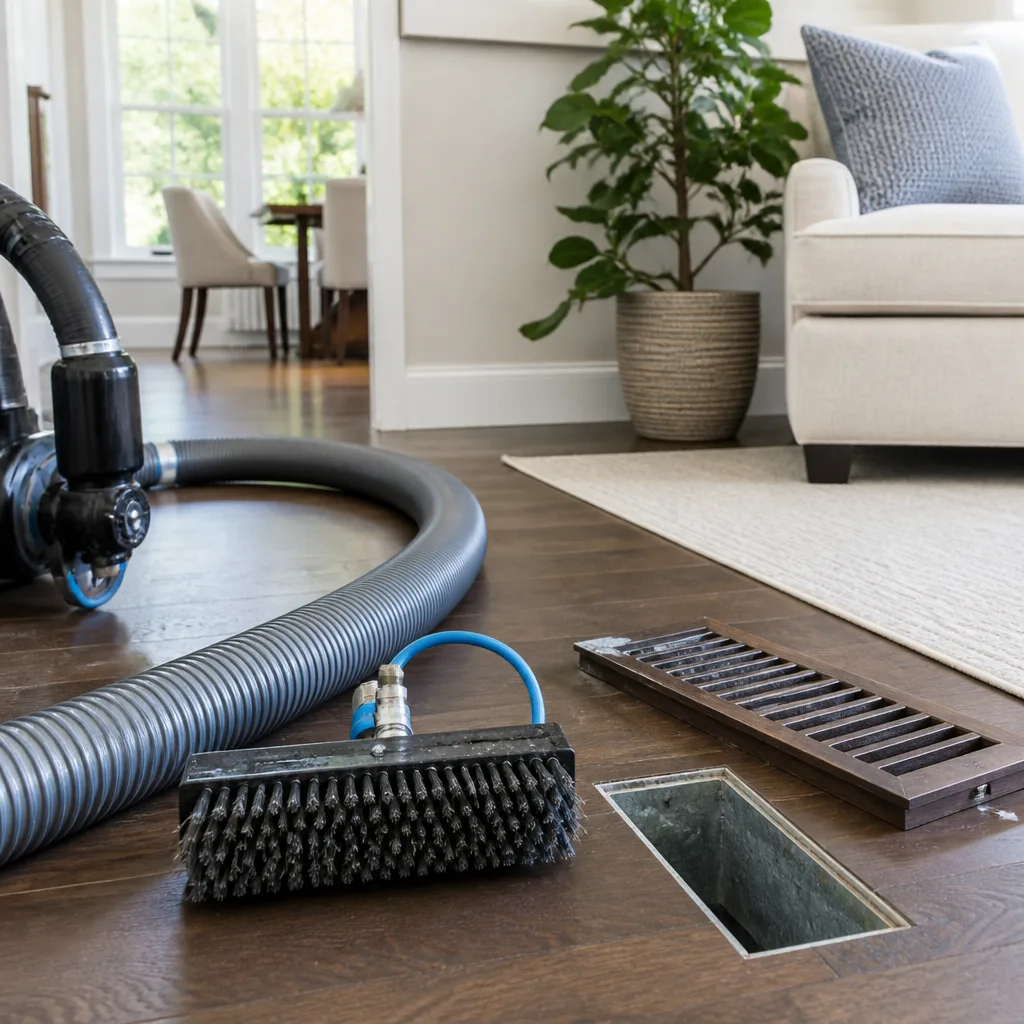 Whole-home duct cleaning
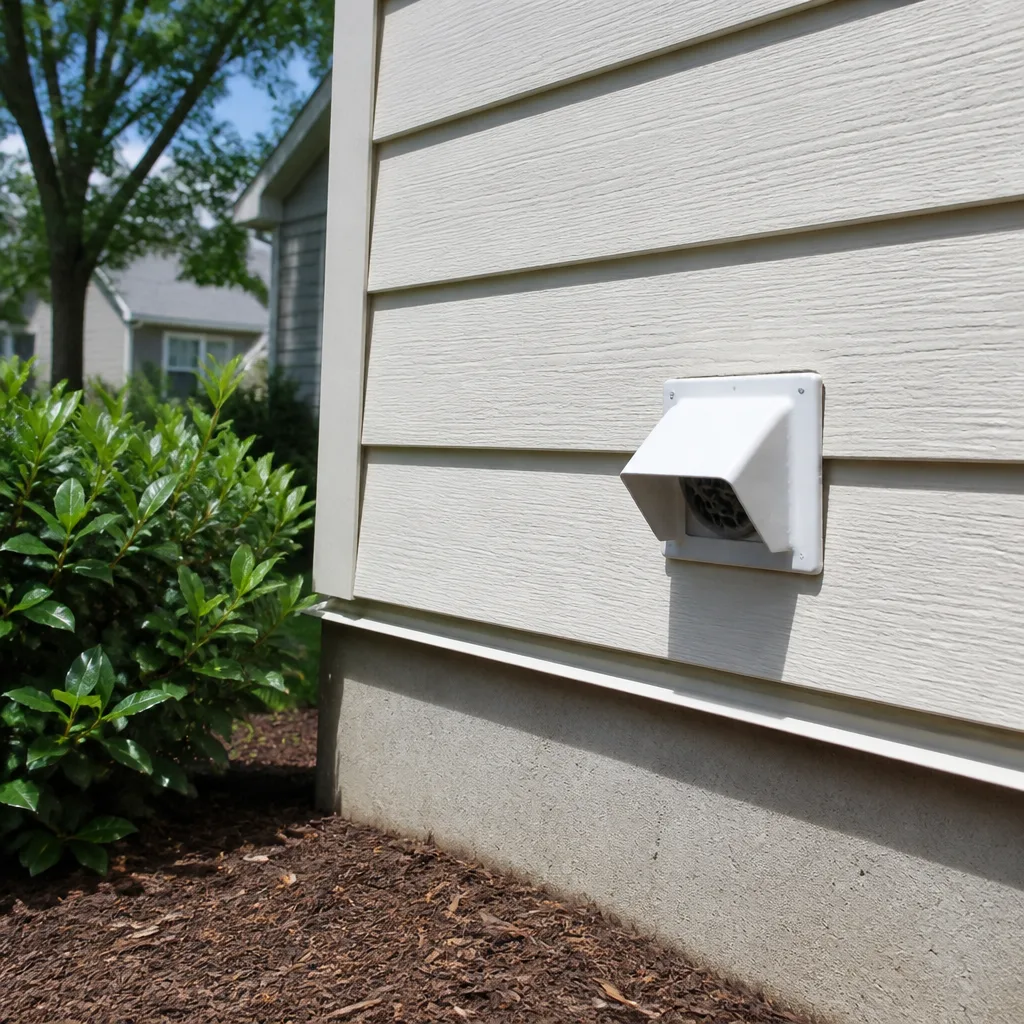 Dryer vent cleaning
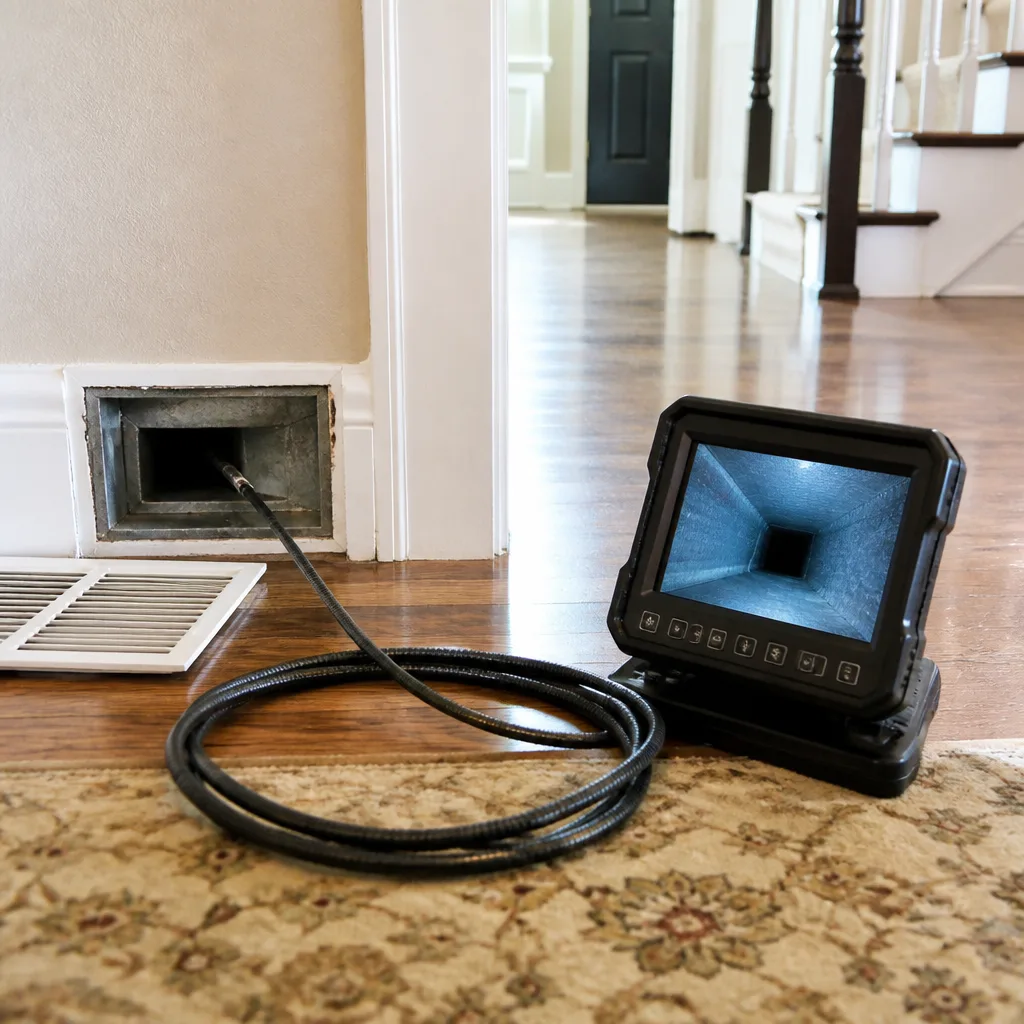 Camera inspection
 Sanitizing & deodorizing
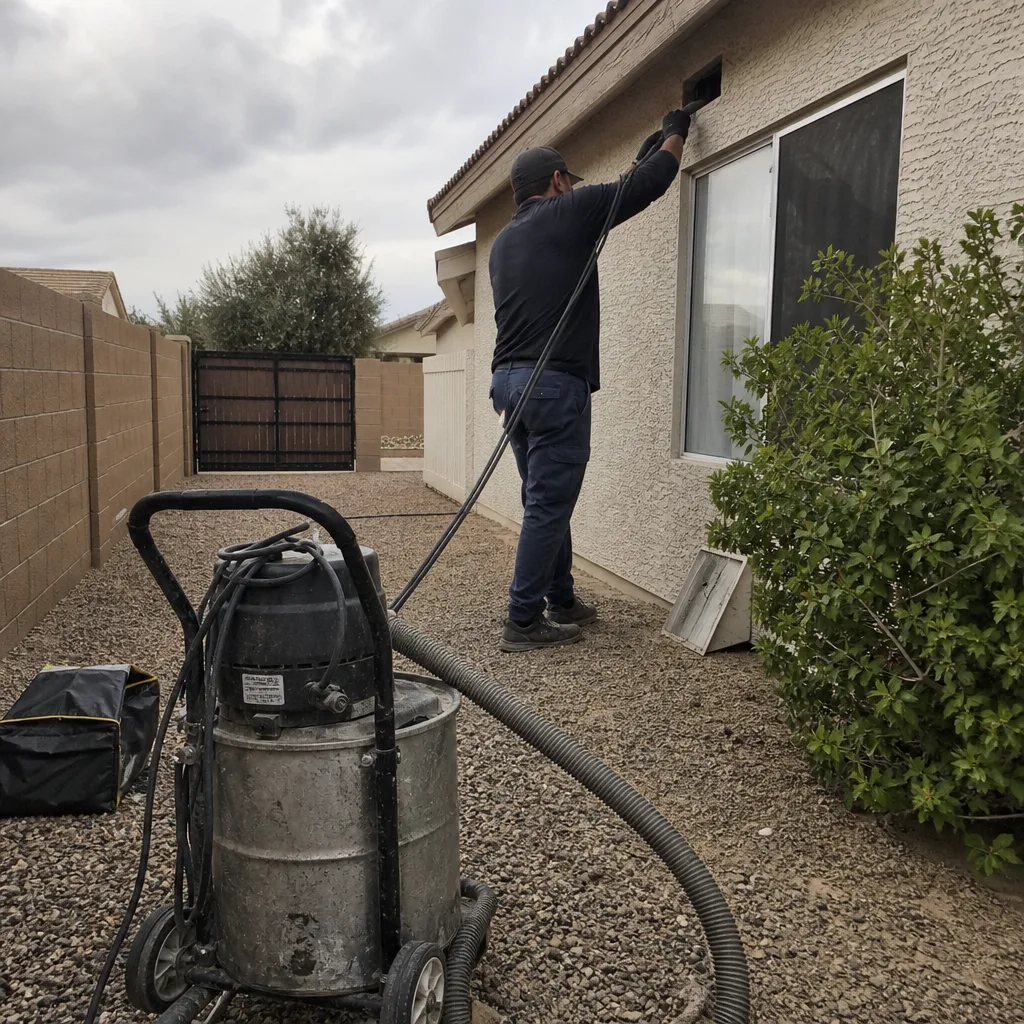
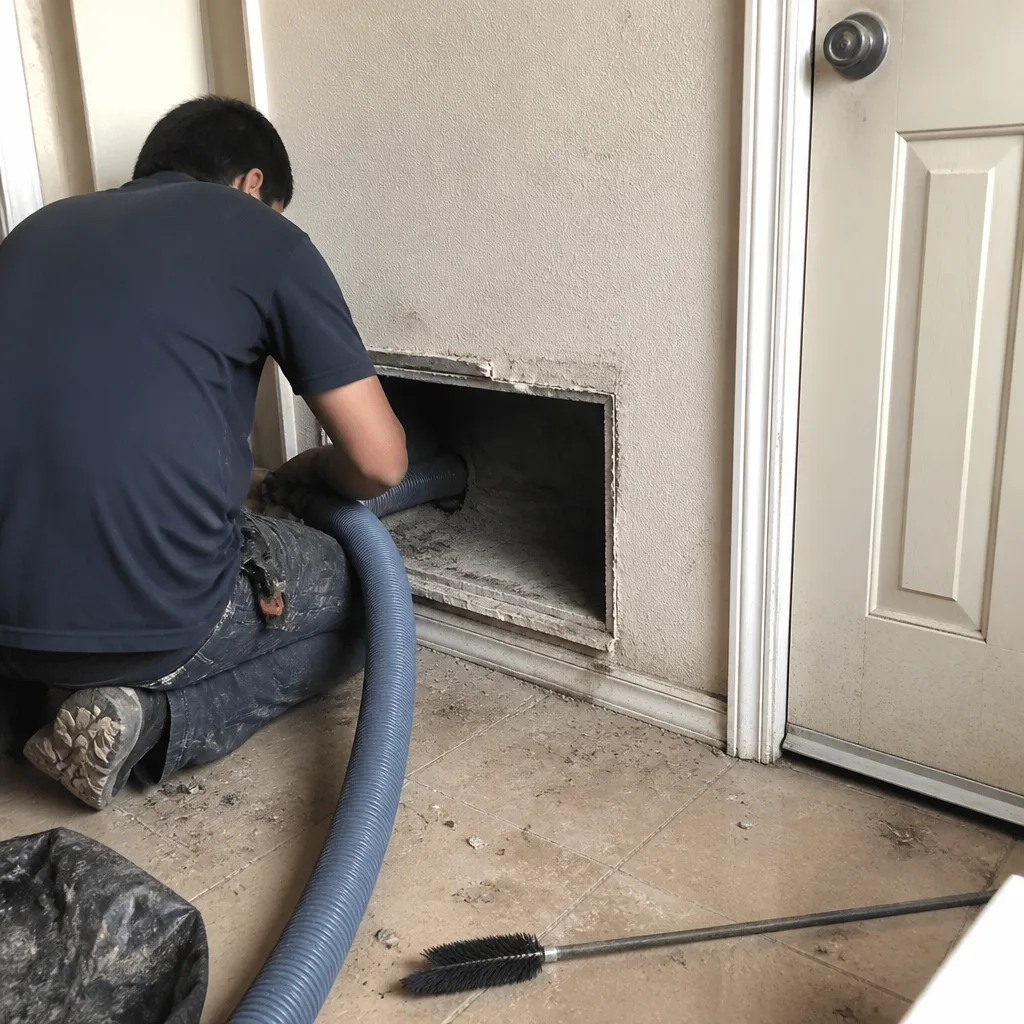
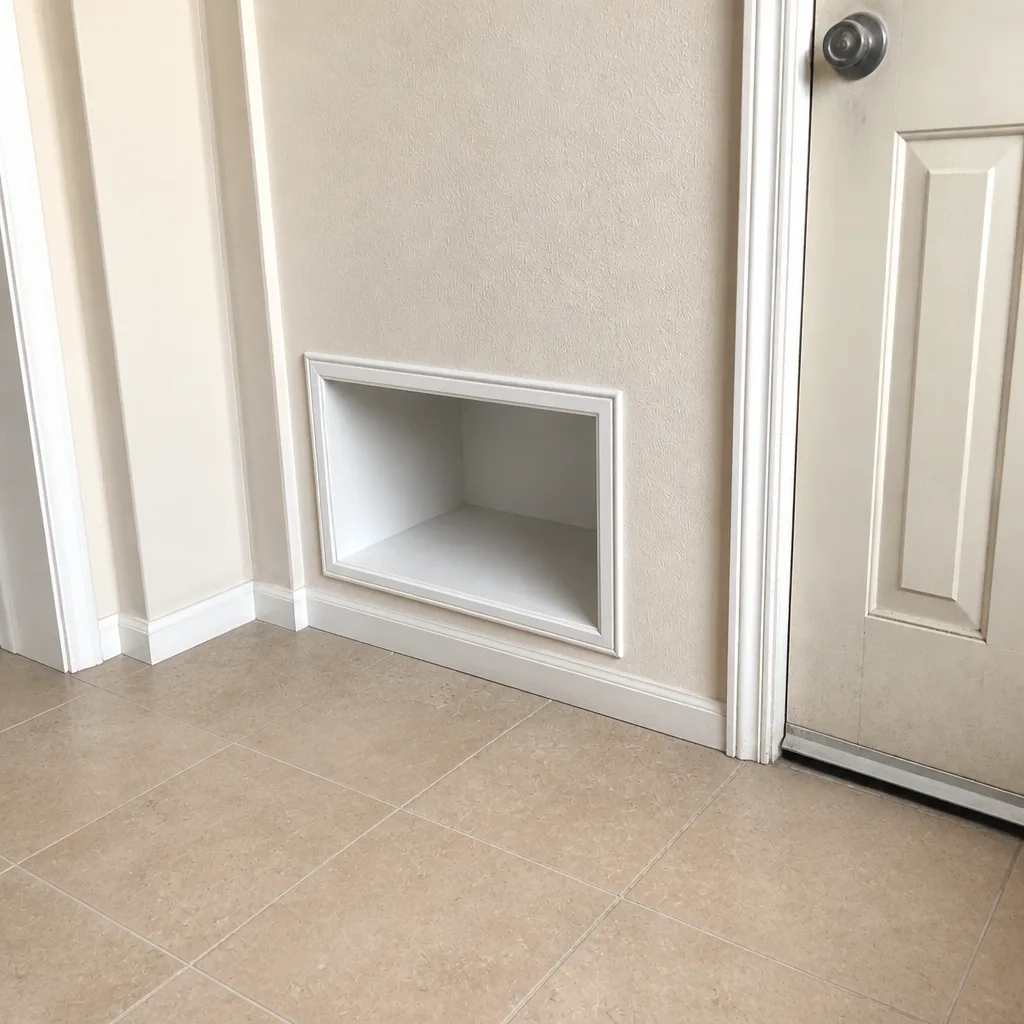
Whole-system duct and dryer vent check with before-and-after photos - you see exactly what came out of your vents
That "$99 whole-house special" is a bait ad - the real number appears once they are in your hallway, or the "clean" is a shop-vac at the register. We photograph the inside of your ducts before and after instead.
Air Duct Cleaning Permits, Codes & Inspections in Yuma, AZ: What You Need to Know
Here’s the part that surprises most homeowners: the cleaning itself is the easy half of the paperwork question. In Arizona, routine air duct cleaning doesn’t require a permit. But the moment a technician cuts into a trunk line, reroutes flex duct, replaces a run, or reconnects an air handler, that work falls under mechanical code, and in Yuma it’s supposed to be permitted and inspected. The gap nobody talks about is this: duct cleaning crews regularly find crushed, torn, or disconnected ductwork mid-job. Some patch it on the spot with no paperwork at all, and that quiet repair becomes an unpermitted modification that can surface years later at a home inspection. This guide walks through where Arizona draws the cleaning-versus-repair line, when Yuma’s Development Services department gets involved, how to check an Arizona ROC license, what happens at resale, and when mold in ductwork pulls in a different set of rules entirely.
Quick Answer
Air duct cleaning by itself does not require a permit in Yuma, Arizona, because it’s maintenance rather than construction. Duct repair, duct replacement, flex duct rerouting, and reconnection of ductwork to an air handler are mechanical work under the International Mechanical Code as adopted by Arizona, and those typically do require a permit and inspection through the City of Yuma’s Development Services department. The dividing line is whether the work changes, replaces, or reconnects part of the system, not whether a technician was already there cleaning it.
Styles & brands we work with
- Whole-home duct cleaning
- Dryer vent cleaning
- Camera inspection
- Sanitizing & deodorizing
Table of Contents
- Cleaning vs. Repair: Where Arizona Draws the Permit Line
- When Yuma’s Development Services Department Gets Involved
- How to Verify a Contractor’s Arizona ROC License
- What Happens at Resale If Unpermitted Duct Work Is Found
- Mold in Ductwork: When It Triggers Extra Requirements
- What a Duct-Related Inspection Actually Looks At
- Why Yuma’s Desert Climate Ages Ductwork Differently
- How to Keep Clean Records for Duct Work
Cleaning vs. Repair: Where Arizona Draws the Permit Line
Cleaning removes debris from a duct system that stays structurally as it was. Repair changes the system. That’s the cleanest way to think about it, and it’s the distinction Arizona’s adopted mechanical code hinges on. The International Mechanical Code, which Arizona has adopted as the basis for mechanical work statewide, treats duct systems as part of the mechanical installation. Maintenance activities that don’t alter the installation fall outside the permit requirement. Activities that modify, replace, or extend it fall inside.
In practice, here’s how the line usually falls:
- No permit typically required: brush cleaning and vacuum extraction of supply and return ducts, sealing small accessible joints with mastic or approved tape, replacing a filter, cleaning a dryer vent, and inspecting ductwork for damage.
- Permit typically required: replacing a section of rigid or flex duct, rerouting a duct run to serve a different space, adding or removing a supply register, reconnecting ductwork to an air handler or plenum, changing duct sizing, and any repair that alters the air distribution design of the system.
The gray zone is where the trouble lives. A technician cleaning ducts in a home near the Yuma Palms area finds a crushed flex run behind a knee wall. Fixing it properly means removing the damaged section and installing new duct, which is a modification. Patching it with tape and moving on requires no paperwork but often doesn’t hold. In our experience, homeowners who understand this distinction up front ask better questions and end up with a repair that actually lasts instead of a temporary fix that reappears in two cooling seasons.
None of this means cleaning companies are doing something wrong by cleaning without a permit. They aren’t. The issue is disclosure. When a cleaning visit turns into a repair, the homeowner should be told, in writing, that the scope changed from maintenance to mechanical work, and what that means for permits and inspection.
When Yuma’s Development Services Department Gets Involved
The City of Yuma’s Development Services department is the office that issues mechanical permits and sends inspectors for residential HVAC work inside city limits. If the work involves replacing ductwork, rerouting flex duct, or reconnecting ducts to an air handler, the permit application typically goes through that department, and an inspector visits after the work is complete and before any of it is concealed behind drywall or attic insulation.
The permit process for duct work in Yuma generally follows a set order:
- Scope is defined. The contractor identifies what’s being replaced, rerouted, or reconnected, and how much of the system is affected.
- Permit is applied for. The application describes the mechanical scope, including duct sizes, materials, and connection points. For a straightforward duct replacement, this is often a simple over-the-counter permit.
- Work is performed. Duct work is installed and sealed per the approved scope.
- Inspection is requested. The contractor calls for inspection once the work is done and before it’s covered up.
- Inspector reviews. The inspector confirms duct material, support, sealing, connections, and clearances. Deficiencies are noted and corrected, then re-inspected.
- Permit is closed. The closed permit becomes part of the property’s record with the city.
Outside city limits, in areas like the Foothills or the communities along Avenue 7E, the authority having jurisdiction may be Yuma County rather than the city. The process is similar, but the office and the forms differ. If you’re not sure which jurisdiction your home falls under, the answer is one phone call to whichever building department covers your address, and it’s worth making before any duct repair starts. Duct Cleaning Yuma works across the greater Yuma area and can tell you which side of that line your address sits on when we scope a repair.
What doesn’t trigger a Yuma Development Services permit: cleaning, dryer vent cleaning, filter replacement, and minor sealing that doesn’t alter the system. Those are maintenance activities and stay outside the permit window.
How to Verify a Contractor’s Arizona ROC License
Arizona contractors who perform mechanical work, including duct replacement and reconnection, are required to hold a license from the Arizona Registrar of Contractors. That license covers a defined scope, called a class, and the class matters. A contractor licensed for one scope isn’t automatically licensed to perform another. If duct repair or replacement is part of the job, verify the license covers that work before anyone touches the system.
The lookup process is quick and anyone can do it:
- Go to the Arizona Registrar of Contractors website and open the license search tool.
- Enter the contractor’s business name or license number. Ask the contractor for the license number directly if they haven’t provided it.
- Review the license status (active, suspended, expired), the license class, and the scope of work it authorizes.
- Check for any complaint history or disciplinary actions listed on the record.
- Confirm the business name on the license matches the name on your estimate and contract.
That last step catches more problems than people expect. A crew showing up can carry a business card with one name while the license sits with a different entity. If the names don’t match, ask why before signing anything. For duct cleaning alone, Arizona doesn’t require an ROC license because cleaning isn’t contracting. For duct repair, replacement, or reconnection, it does. Our technicians have up to 11 years of experience, and we’re clear with homeowners about where cleaning ends and licensed mechanical repair begins, because pretending the two are the same thing is how people end up with unpermitted work in their attic.
One more verification point worth doing: ask for a certificate of insurance. Licensed and insured aren’t the same thing. A contractor can hold a valid ROC license and still not carry liability coverage, and if something goes wrong with a duct run that’s feeding into an air handler, that coverage matters.
What Happens at Resale If Unpermitted Duct Work Is Found
Unpermitted duct work usually sits quietly for years, then surfaces at the worst possible time: during a home inspection before closing. A thorough inspector will note replaced duct sections, non-standard connections, or rerouted runs that don’t match the original system, and will often flag them as “work not permitted, verification recommended.” At that point a buyer’s agent asks for documentation, and if there isn’t any, the seller is the one on the clock.
What happens next tends to follow one of a few paths:
- The seller documents and discloses. If the work was done correctly, the seller can disclose the unpermitted repair and provide whatever records exist. Buyers may accept this with a credit or a re-inspection.
- The seller retroactively permits the work. The homeowner applies for a permit through the jurisdiction that covers the address, has the work inspected, and closes the permit. This is the cleanest resolution but may require opening walls or attic access so the inspector can see the work.
- The buyer walks or renegotiates. If the duct work looks questionable or the jurisdiction won’t permit work that’s already concealed, the deal can stall or the price can be reduced to cover the eventual repair.
The lesson isn’t to avoid duct repair. It’s to keep the paper trail. A homeowner who had a duct run replaced with a permit, an inspection, and a closed permit on record has no exposure at resale. A homeowner who had the same run patched without a permit has a question mark in the file that can cost real money at the negotiating table.
If you’re buying a home in Yuma and the inspection report flags duct work, request the permit history from the city or county before closing. It’s a five-minute check that can reveal a lot about how the previous owner maintained the system.
Mold in Ductwork: When It Triggers Extra Requirements
Mold growth inside ductwork is a different regulatory lane than duct repair. In general, if a duct cleaning company finds visible mold growth beyond what routine cleaning can address, the EPA and Arizona Department of Health Services guidance both point toward remediation being handled as a remediation project rather than a standard cleaning job. Arizona Department of Health Services publishes guidance on indoor mold and recommends that remediation of significant growth be performed following established remediation practices, which typically means containment, negative air pressure, and HEPA filtration throughout the work area.
Yuma’s climate makes mold in ductwork less common than in humid regions, but not impossible. Air handlers in garages, condensate line leaks, and improperly sealed duct connections in humidified homes can all support growth. What tends to happen in these cases:
- Visual confirmation first. A technician confirms visible growth on duct interior surfaces, not just “musty smell.”
- Scope change. The job moves from cleaning to remediation, with containment, negative air, and HEPA filtration in place.
- Homeowner disclosure. The homeowner is told what was found and what the remediation scope involves before the work proceeds.
- Repair review. If the duct itself is damaged (porous duct board or compromised flex duct), it’s typically replaced rather than cleaned, because cleaning mold from porous materials isn’t reliable.
- Documentation. Before-and-after photos, moisture readings, and a written summary are provided so the homeowner has a record.
For serious mold issues, particularly when the growth extends into wall cavities or the air handler, remediation across the whole system may require coordination with an HVAC contractor and, depending on scope, additional permitting. Cleaning without addressing the moisture source doesn’t solve the mold problem. It just resets the clock.
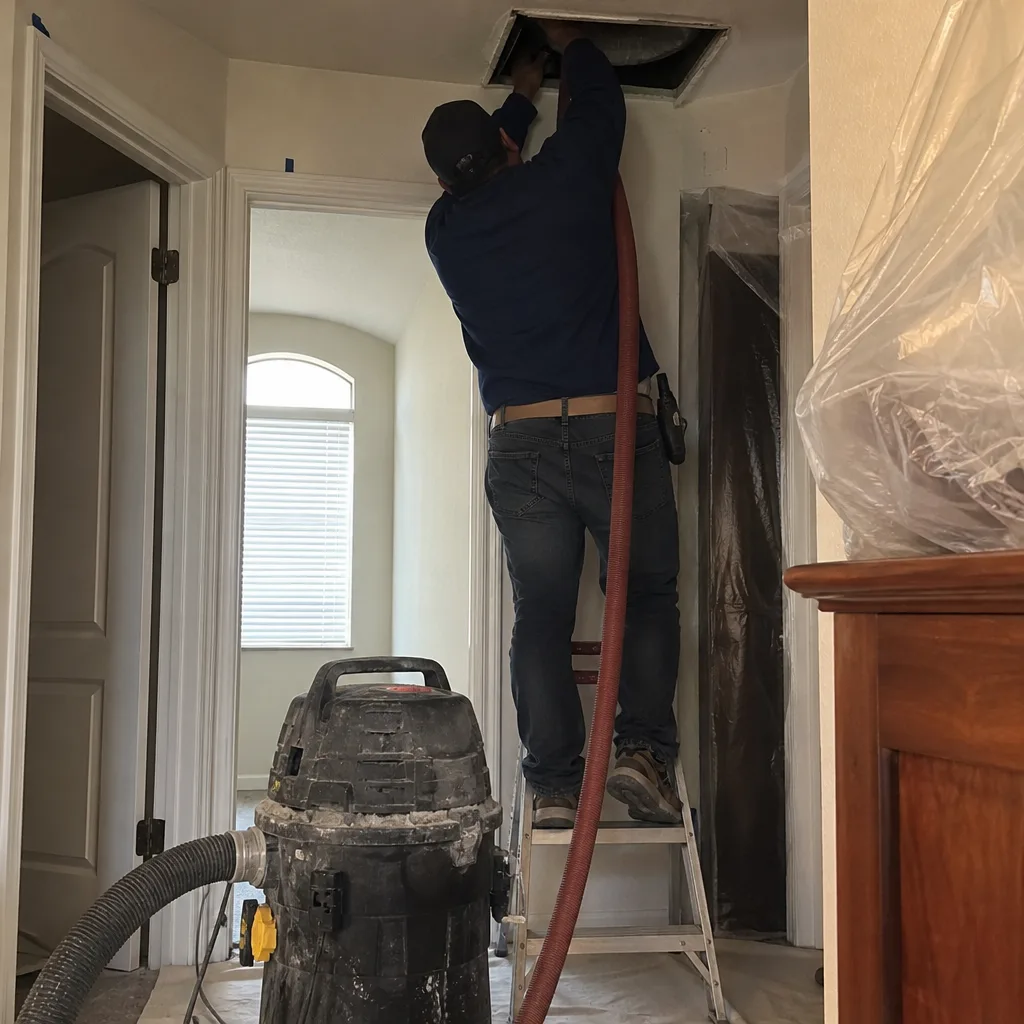
For duct work itself, use professional-grade equipment that contains the debris it dislodges. An air duct cleaning job done with a shop vacuum and a hose redistributes the problem more often than it solves it. Rotobrush rotary-brush agitation paired with Nikro HEPA extraction, and Abatement Technologies negative-air containment on jobs where the debris load or suspected contamination is high, is the standard we hold ourselves to because it’s the standard the remediation trade uses.
What a Duct-Related Inspection Actually Looks At
When an inspector visits a duct repair in Yuma, the review isn’t a general look-around. It’s a check against the mechanical code and the approved scope. Knowing what’s being reviewed helps a homeowner understand why certain things can’t be shortcut.
- Duct material and listing. Duct materials must be listed for the application, and flexible duct must be installed per its listing. Unlabeled, non-listed, or repurposed materials fail.
- Support and sag. Flex duct needs proper support spacing and can’t sag beyond its listing’s allowance. Sag reduces airflow and stresses the connection points.
- Sealing at connections. Duct joints, seams, and connections must be sealed per the code and the approved scope. Mastic and approved tape at joints are checked.
- Connections to the air handler. The plenum connection, takeoffs, and transitions are reviewed, because this is the highest-pressure part of the system and the most likely place for leakage.
- Clearances and routing. Ducts must maintain required clearances from heat-producing equipment, and routing must match the approved scope, especially if it passes through unconditioned attic space.
- Access for future inspection and cleaning. Duct systems are supposed to be accessible where code requires, and fixing a previous shortcut where ducts were boxed in without access can be part of the scope.
What fails most often in our experience isn’t the duct itself, it’s the sealing and the support. Rushed installations skip the mastic on flex connections and leave the run sagging between hangers, which a careful inspector catches. Failures get documented on the inspection report and re-inspected once corrected. That’s a delay, but it’s cheaper than an unsolved leak in an unconditioned attic running 115-degree days through Yuma’s summer.
Why Yuma’s Desert Climate Ages Ductwork Differently
Yuma’s summer heat puts ductwork in unconditioned attics through a stress pattern that humid climates don’t share. Attic temperatures climb steeply through the day, and duct systems that carry cold air through that attic run a wide temperature differential for months. The practical effect is that flex duct in a Yuma attic loses tension over time, connections work loose, and the outer vapor barrier on flex duct can crack and fail from simple thermal cycling.
That has two consequences for permits and inspections. First, duct damage in Yuma is more likely to be found during cleaning than at any other time, because the cleaning equipment reaches areas a homeowner never sees. Second, when duct work is repaired, the fix needs to account for the attic heat. Duct runs routed with the wrong support spacing or installed with inadequate clearance to hot surfaces fail faster here than they might in a milder climate, and inspectors look for that.
The other Yuma-specific factor is dust. Desert dust finds its way into return systems, and homes with leaky duct connections pull that dust directly into the airstream. Homeowners in neighborhoods like the Foothills or along 24th Street often find that a duct repair plus a proper cleaning solves an air quality complaint that filter changes alone never touched. Where a duct leak exists, more filtration just means more filter, not cleaner air, because the air is entering the system downstream of the filter.
Dryer vents are a separate category worth noting here because they’re part of the same system discussion and a genuine fire-safety concern. dryer vent cleaning doesn’t require a permit, but a dryer vent that’s crushed, disconnected, or routed against code during a dryer install is a common inspection finding. If a technician who’s cleaning ducts finds a dryer vent problem, it’s the kind of thing worth fixing while the access is open rather than scheduling a second visit.
How to Keep Clean Records for Duct Work
Records are the cheapest insurance against a permit problem later. When duct work is done properly, a homeowner ends up with a paper trail that closes the loop for any future inspection or sale. Here’s what to keep, and how:
- Written estimate with scope. The estimate should describe what’s being cleaned versus what’s being repaired, so the cleaning portion is clearly documented as maintenance and the repair portion as mechanical work.
- Permit number and address, if one was pulled. Keep the permit number with your home file. When the permit is closed, request the final inspection documentation from the jurisdiction.
- Contractor license number. Write the ROC license number on the invoice or keep it with your records so the scope of work and the license match.
- Before-and-after photos. Photos of the duct interior before cleaning or repair, and after, document what was done. Any contractor claiming to have cleaned or repaired duct work should be able to provide these.
- Filter and equipment notes. If filtration products were installed (Honeywell, Aprilaire, or Guardsman are common), record the model and installation date so the next service visit starts with the right information.
- Moisture or mold documentation. If any part of the job involved moisture readings or mold remediation, keep those records separately; they’re relevant at resale and in any future remediation discussion.
We provide before-and-after photos on every job, and we work with Honeywell, Aprilaire, and Guardsman filtration products so filter and air-quality upgrades at the same appointment don’t get lost to a second contractor visit. For a closer look at how we handle the cleaning side and the equipment we use, see Duct Cleaning Yuma.
Common Mistakes to Avoid
- Assuming cleaning includes repair. Cleaning is not repair, and the price of cleaning doesn’t cover a duct replacement. If a technician finds damage, ask explicitly whether the repair requires a permit and who’s pulling it.
- Letting a cleaning crew patch damage with tape and walk away. A taped flex joint on a Yuma attic duct run doesn’t last the summer. It’s also unpermitted repair work, which becomes an issue at resale.
- Skipping the ROC license check on repair work. Arizona requires an ROC license for duct repair and replacement. Verify the license class before work starts, not after the invoice arrives.
- Calling cleaning a permit issue. It isn’t. Cleaning doesn’t require a permit in Yuma. If a contractor tells you it does, ask for the code reference before writing a check.
- Ignoring mold signs because Yuma is dry. Dry climate lowers the odds but doesn’t eliminate them. Any visible growth on duct interior surfaces should move the job from cleaning to remediation scope.
- Skipping records for duct work. No permit number and no photos means no defense at resale if the work is questioned. Keep both.
- Having ducts cleaned without asking about the dryer vent. Both are part of the same air pathway, and a crushed dryer vent that goes unaddressed is a real fire concern. Ask for it to be checked in the same visit.
See the difference
 Before
 After
 Before
 After
 Before
 After
When to Call a Professional
Some duct issues are honest weekend-check items: a filter change, a rattling register, a mild smell. Others aren’t. Call a professional when you find visible damage to ductwork (torn flex, disconnected sections, crushed runs behind walls or in the attic), when an HVAC contractor has flagged a duct issue that affects airflow to a specific room, when you suspect mold growth inside ducts, when the dryer vent shows signs of blockage or a crushed run, or when a home inspector notes duct work and you need the repair done properly with the right paperwork. Duct Cleaning Yuma offers free estimates in Yuma, and we’ll tell you honestly whether your situation is cleaning-only, a licensed mechanical repair, or a job that needs a permit and inspection before anyone starts. Call (888) 871-1789 to book a scope walk-through.
Frequently Asked Questions
No. Routine air duct cleaning doesn’t require a permit in Yuma because it’s maintenance work, not construction. A permit becomes relevant only when the scope shifts to duct repair, duct replacement, flex duct rerouting, or reconnection to the air handler. If a cleaning visit turns into a repair, ask whether that repair requires a permit before the work proceeds.
The City of Yuma’s Development Services department issues mechanical permits for residential duct work inside city limits. Properties outside the city may fall under Yuma County jurisdictions instead. If you’re unsure which office covers your address, a quick call to the building department settles it, and it’s worth checking before any duct repair starts. Call (888) 871-1789 if you want help figuring out which jurisdiction applies.
Cleaning removes debris without altering the installation. Repair changes, replaces, or reconnects part of the duct system. The International Mechanical Code, as adopted by Arizona, treats duct systems as part of the mechanical installation, so any modification or replacement falls within permit territory. Sealing small accessible joints and replacing filters remain maintenance, but replacing a duct run or reconnecting to a plenum does not. Call (888) 871-1789 if you want us to walk through where your specific job sits on that list.
Yes. A home inspector who finds duct work that doesn’t match the original system will often flag it as “verification recommended,” and that can stall a sale or force renegotiation. The fix is to have the work retroactively permitted and inspected, which usually requires attic or wall access. Keeping permit records for any duct repair avoids the problem entirely.
It can. Mold growth beyond what cleaning addresses typically moves the job into remediation scope, which generally follows remediation practice rather than mechanical code. Depending on the extent of growth and whether duct materials need replacing, a mechanical permit may also become part of the work. Arizona Department of Health Services publishes guidance on indoor mold, and it’s worth reading before deciding how to handle a visible growth issue. Call (888) 871-1789 for an assessment.
Most homes don’t need annual duct cleaning. Common intervals are every three to seven years, sooner if there’s been a renovation, a pest issue, visible mold, or a duct leak pulling desert dust into the airstream. Yuma homes that sit near construction or have poorly sealed returns tend to need cleaning on the shorter end of that range. If it’s been a while, call (888) 871-1789 for a free estimate and we’ll tell you whether cleaning is actually needed.
The Bottom Line
Cleaning doesn’t require a permit in Yuma. Repair does. That one sentence covers most of this guide. Routine duct cleaning, dryer vent cleaning, and filter changes are maintenance activities. Duct replacement, rerouting, and reconnection to the air handler are mechanical work that falls under the International Mechanical Code as adopted by Arizona, and typically requires a permit and inspection through the City of Yuma’s Development Services department. Before any duct repair proceeds, verify the contractor’s ROC license covers that scope, ask who’s pulling the permit, and insist on before-and-after photos and written records. Keep the paper trail. It’s what protects the homeowner at resale, and it’s what separates a properly documented repair from a taped-over patch job that resurfaces in the inspection report five years later. The desert climate here stresses duct systems in ways most homeowners never see, which is exactly why the paperwork behind a proper repair matters as much as the duct itself.
Duct Cleaning Yuma handles the full air pathway: cleaning, dryer vents, and repair, with professional-grade Rotobrush and Nikro equipment and Abatement Technologies containment on jobs that call for it. Free estimates, licensed and insured, one flat price per system agreed before work starts. Call (888) 871-1789. We answer 24/7. Fast dispatch from 7am to 7pm, Sunday through Friday.
Written by the team at Duct Cleaning Yuma.