
Last updated November 15, 2026
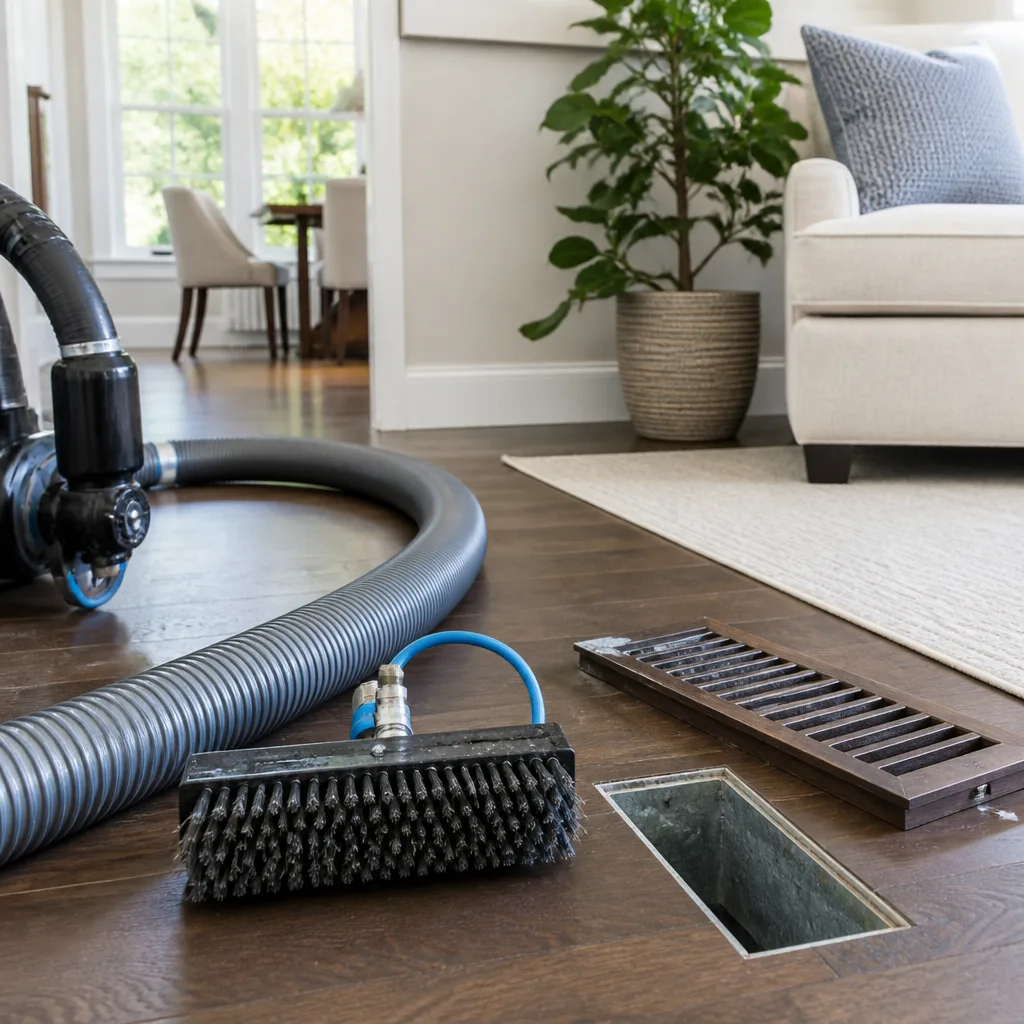 Whole-home duct cleaning
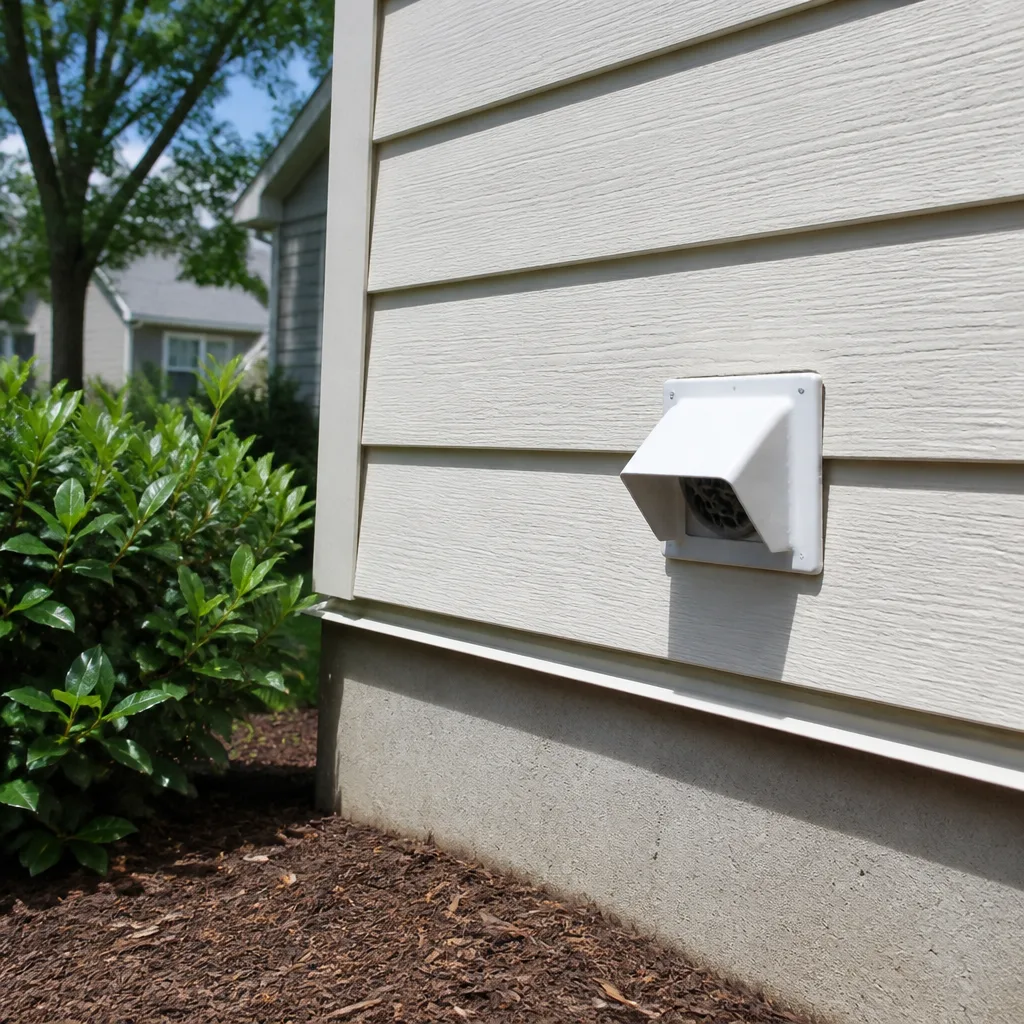 Dryer vent cleaning
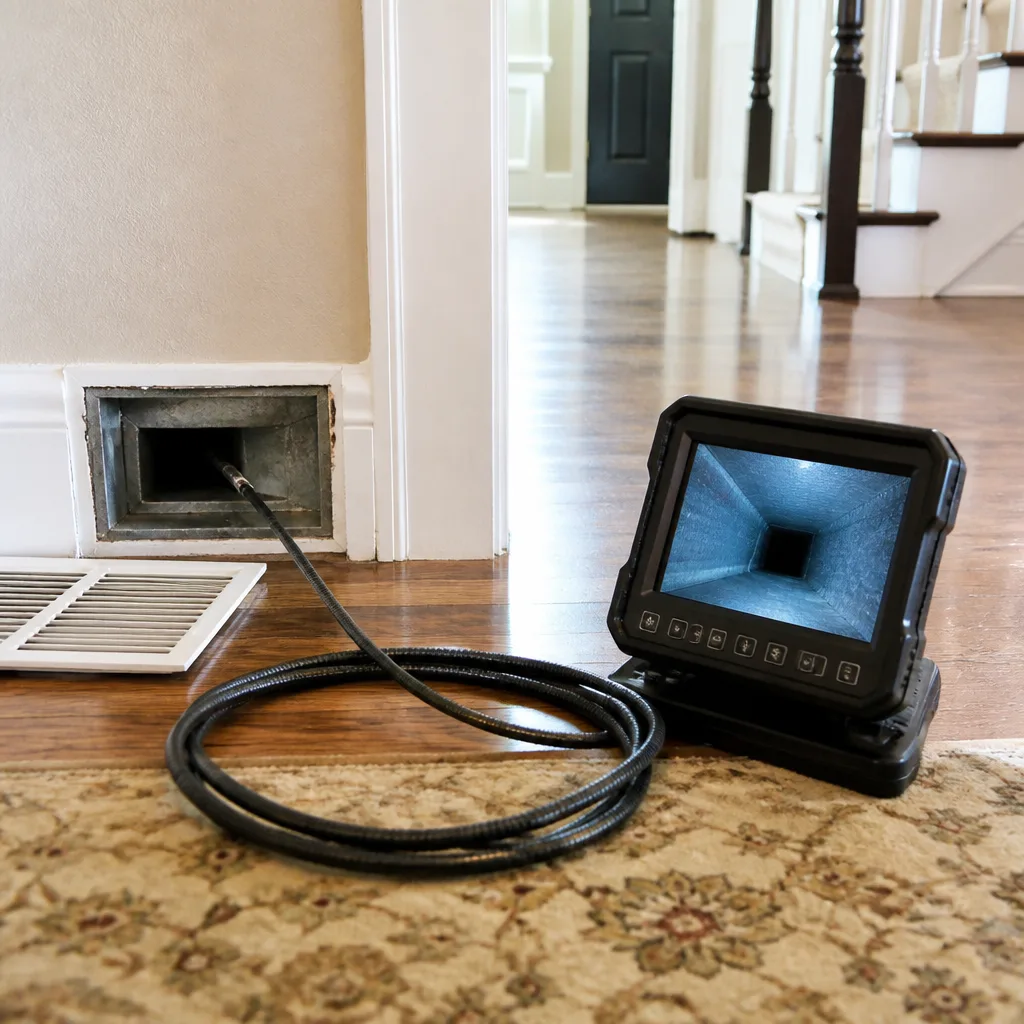 Camera inspection
 Sanitizing & deodorizing
Whole-system duct and dryer vent check with before-and-after photos - you see exactly what came out of your vents
That "$99 whole-house special" is a bait ad - the real number appears once they are in your hallway, or the "clean" is a shop-vac at the register. We photograph the inside of your ducts before and after instead.
The Complete Guide to Air Duct Cleaning in Yuma
Most duct cleaning advice you’ll read online was written for a house in a temperate climate, where the furnace runs a few months a year and the windows stay shut through a long winter. Yuma doesn’t work that way. Your air conditioner runs for the better part of the year, pulling desert air through the same ductwork day after day, and that changes how fast the system gets dirty and what kind of debris builds up inside it. This guide maps the real cleaning pathway for a Yuma home: supply and return ducts, the return plenum, the evaporator coil housing, the drain pan, and the dryer exhaust. You’ll learn how alkaline dust and monsoon humidity affect your ducts, what professional-grade equipment actually does that a shop vacuum can’t, and how to confirm a cleaning was done properly instead of taking someone’s word for it.
Quick Answer
Air duct cleaning in Yuma is a full-pathway job, not a vent wipe-down: it means agitating and extracting debris from the supply and return ducts, the return plenum, the coil housing, and the drain pan with HEPA-rated vacuum equipment and containment. Because Yuma’s HVAC systems run far more hours per year than systems in cooler climates, and because desert dust is fine and alkaline, ducts here load up faster than national interval guidelines assume. Most Yuma homes benefit from an inspection first, then a cleaning based on what the inspection actually shows.
Styles & brands we work with
- Whole-home duct cleaning
- Dryer vent cleaning
- Camera inspection
- Sanitizing & deodorizing
Table of Contents
- Why Yuma Ducts Get Dirty Faster Than National Guides Suggest
- The Full Cleaning Pathway: What Most Cleanings Skip
- Monsoon Season and Biological Growth Risk
- What Professional-Grade Equipment Actually Does
- How to Verify a Cleaning Was Actually Completed
- Dryer Vents: The Other Half of the Air Pathway
- Duct Repair: Why Cleaning Alone Isn’t Always the Answer
- How Often Should You Clean Ducts in Yuma?
Why Yuma Ducts Get Dirty Faster Than National Guides Suggest
National recommendations for duct cleaning tend to be built around a house that heats in winter, cools in summer, and opens its windows for a good part of the year. A Yuma home runs its air handler far more than that. The system pulls outdoor air and indoor return air across the evaporator coil and pushes it through the ducts for a much larger share of the calendar, and every hour of runtime is another hour of dust loading. That single fact changes the math on how often duct interiors need attention.
Then there’s the dust itself. Desert particulate in and around Yuma includes a lot of fine mineral material, and the soil here has a high caliche content – a calcium carbonate hardpan that breaks down into alkaline, chalky dust. Compared to the lint-heavy household dust of a humid climate, this dust is finer and more abrasive. It settles on duct walls, in the return plenum, and along the coil, and it doesn’t clump the way moist dust does, so a light cleaning pass can stir it back into the airstream rather than remove it.
What that means for Yuma homeowners:
- Fine alkaline dust holds its shape in the air longer than heavier household dust, so it stays suspended and recirculates more readily.
- Heavy runtime means the blower moves more total air volume through the same duct walls, which accelerates accumulation on the return side in particular.
- The return plenum and the space around the coil collect far more than the supply vents that people can see.
- Homes near open desert or agricultural land on the edges of Yuma see the heaviest loading, since wind-blown particulate has less to stop it before it reaches the return intake.
If your filters are loading up faster than the manufacturer’s change interval suggests, that’s a signal the whole system is working harder than a national-average home. It usually means the ductwork deserves a look too. For a look at our full service scope in the area, see Yuma.
The Full Cleaning Pathway: What Most Cleanings Skip
Ask a homeowner what duct cleaning means and most will point at the supply vents in the ceiling or floor. Those vents are the visible end of the system, but they’re the least important part of a real cleaning. The contamination that matters sits deeper in: the return plenum, the evaporator coil housing, and the drain pan. A cleaning that only touches the supply runs leaves the heaviest debris untouched, and the system keeps pulling it back through the airstream.
The full path a proper cleaning follows looks like this:
- Return air intake and plenum. This is where the bulk of the dust enters the system. The plenum – the large chamber between the return grille and the air handler – collects a mat of fine particulate over time and needs to be agitated and extracted, not just wiped at the opening.
- Evaporator coil housing. The coil sits in the airstream and traps dust on both faces. Debris packed against the coil restricts airflow, which makes the system run longer and load the ducts faster. The housing around it needs to be cleaned, not just the accessible coil face.
- Drain pan. Condensate collects in the pan, and in a hot climate the pan stays wet for much of the year. Dust and organic material settle into that moisture and form a film that is a genuine contamination source. The pan and its drain line need to be cleaned and checked for standing water.
- Supply trunk lines and branch runs. Rotary-brush agitation lifts dust off the duct walls, and negative air pressure carries it out. This is the step most homeowners picture when they think of duct cleaning, and it’s only one part of the job.
- Supply vents and registers. The visible finish work at the end of the pathway.
- Dryer vent. A separate exhaust path, but part of the same airborne-debris picture and a fire-safety concern in its own right.
When we clean a system, we handle the full pathway – air duct cleaning across supply and return, plus the coil housing and drain pan that most cleaning-only outfits skip.
Monsoon Season and Biological Growth Risk
For nine months of the year, a Yuma duct system is dry. Desert air holds little moisture, the coil runs more as a dehumidifier than as a source of condensation buildup, and duct interiors stay stable. Then the monsoon arrives, typically July through September, and the picture changes. Humidity in the return air spikes, the evaporator coil and drain pan stay wet longer between cycles, and any dust film that has built up over the dry months becomes a surface where biological growth can take hold.
This is where a lot of generic guide advice falls short. In a humid climate, growth risk is constant and the standard answer is “clean regularly.” In Yuma, the risk is seasonal, and the window to address it is the shoulder on either side of the monsoon. A duct system that was dry and stable through spring can develop a musty smell by August if the coil and drain pan film were never removed. Once the monsoon ends, the humidity drops and the growth risk recedes, but the material that settled into the pan over the wet season is still there.
What to watch for in Yuma homes after a monsoon season:
- A musty or earthy smell from supply vents when the system first starts.
- Visible moisture, standing water, or a slime film in the drain pan.
- A coil that looks dark or matted rather than clean.
- An uptick in allergy-type symptoms that lines up with the wet months.
If any of those show up, the answer isn’t a scented air freshener or a filter swap. The coil housing and drain pan need to be cleaned and dried out, and in some cases the system benefits from a filtration upgrade afterward. We work with Guardsman, Honeywell, and Aprilaire filtration products precisely so that a post-monsoon cleaning can be paired with a filter that fits the load the system is actually seeing.
What Professional-Grade Equipment Actually Does
The single biggest difference between a real duct cleaning and a token one is the equipment. A consumer shop vacuum and a spinning attachment can loosen dust, but it can’t contain it, and containment is the whole point. When debris is agitated without proper extraction, it billows into the room and resettles in the system – which is why some “cleanings” turn the air worse before it gets better.
Professional-grade equipment changes that in three specific ways:
- Rotary-brush agitation. A purpose-built system like the Rotobrush rotary-brush line is designed for HVAC work: the brush spins against the duct wall to loosen the fine alkaline dust that clings to it, while the vacuum pulls it back. Shop accessories are repurposed tools; they don’t agitate with the right contact pressure, and they don’t recover what they loosen.
- HEPA-rated extraction. Nikro HEPA-rated vacuum equipment is built to capture fine particulate rather than blow it back through the exhaust. The difference matters in Yuma specifically, where the dust is fine enough to stay airborne for a long time. A vacuum that isn’t HEPA-rated is a dust distribution machine.
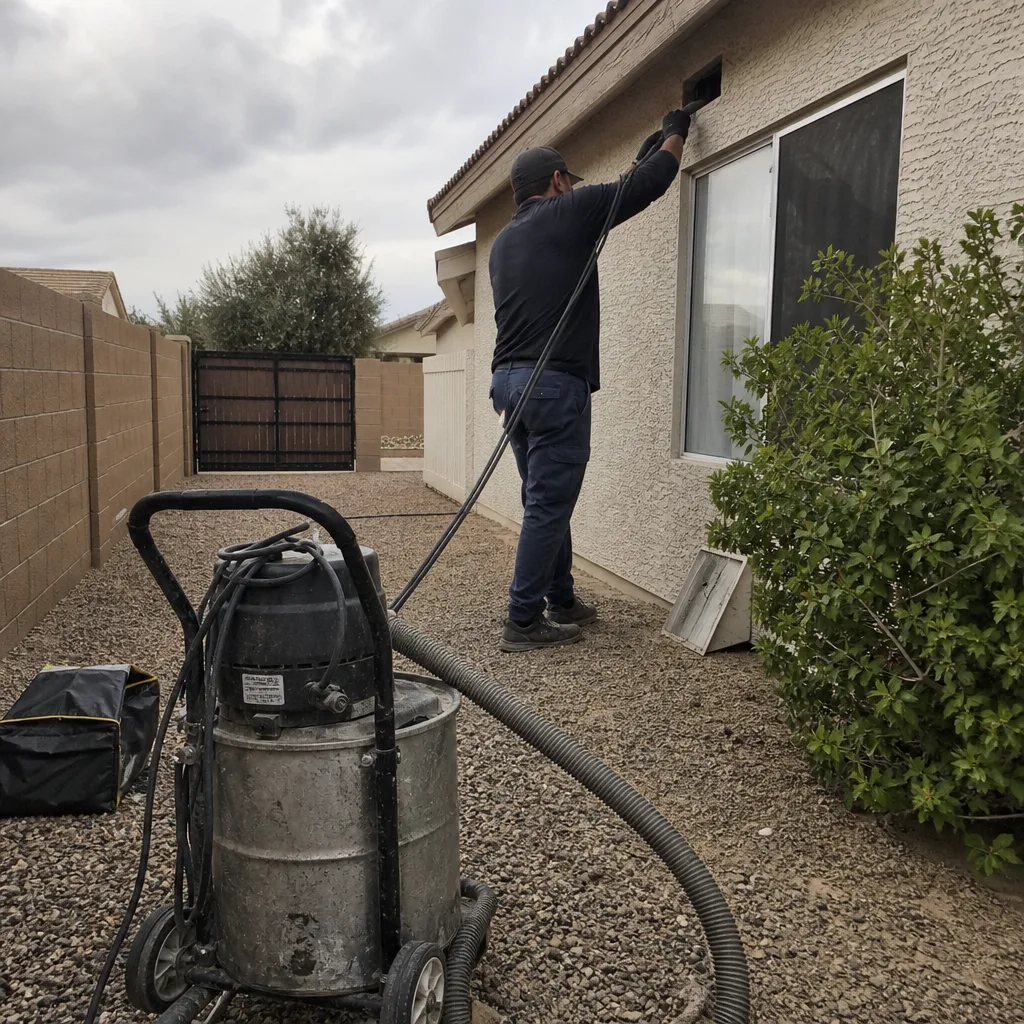
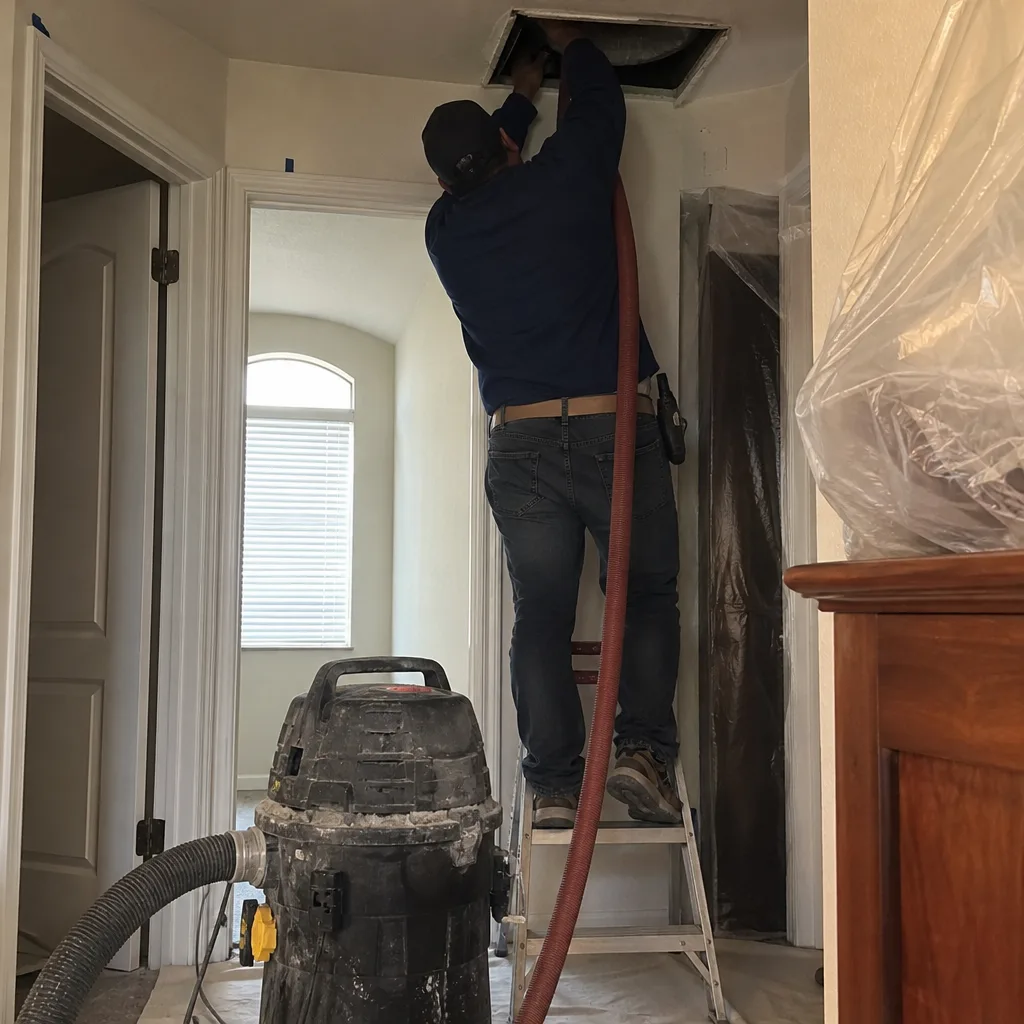
- Containment and negative air. Abatement Technologies air scrubbers and negative-air equipment are the same tools used in professional remediation work. Negative air pressure holds the debris inside the duct and vacuum path so it’s extracted, not redistributed through the house. This is the step that most “budget” cleanings skip entirely, and it’s why some large-scale jobs are done right and some aren’t.
In our experience, the difference shows up most in the return plenum and coil housing, where dust loads are heaviest. Those are the areas a shop-vac rig can’t reach cleanly, which is why companies that rely on one tend to avoid the topic. If a provider can’t explain their CFM rating and HEPA filtration threshold, that’s a sign they don’t have the equipment to do the job right.
How to Verify a Cleaning Was Actually Completed
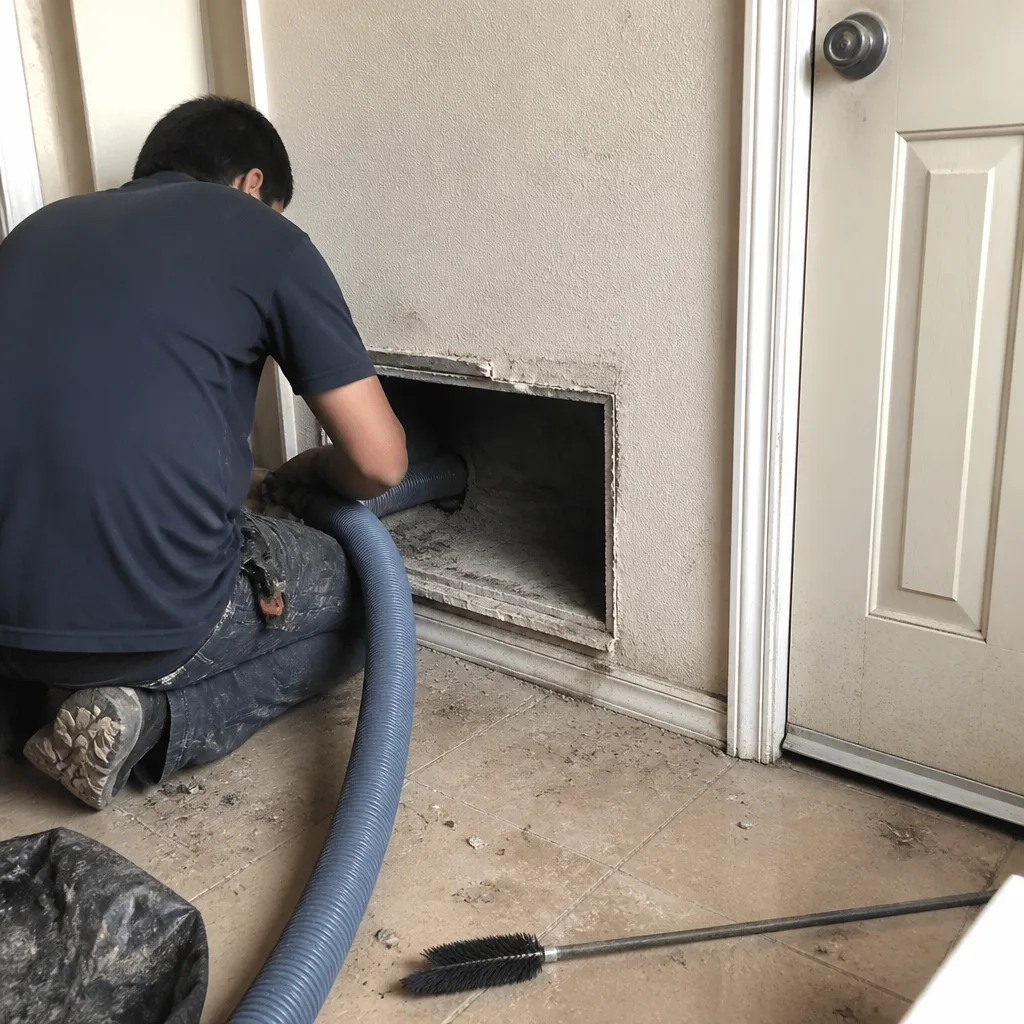
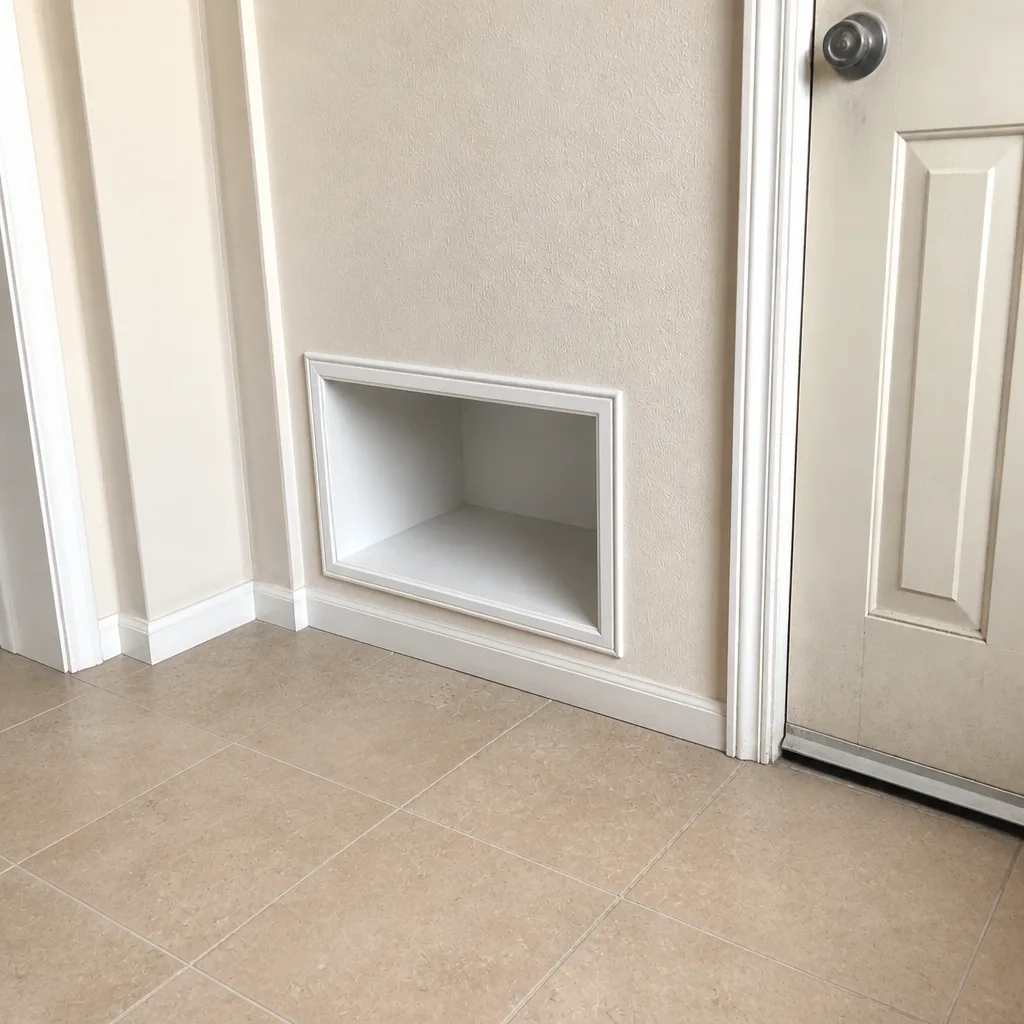
You can’t see inside your ducts while a technician is working, and that’s exactly why the industry has a reputation for taking shortcuts. The best way to confirm a real cleaning is before-and-after video inspection footage of your own ductwork – not a photo of a clean-looking vent, not a verbal “we got it all,” and not a generic stock image. A proper job includes camera inspection before and after, and the footage should show the same runs on both passes so the comparison is honest.
A verification checklist for the day of the job:
- Ask for before-and-after footage of at least the return plenum and a representative supply run. Those are the two areas that show whether real extraction happened.
- Confirm the footage is of your system, address and job, not a demo reel.
- Look for a cleaned coil and drain pan in the after documentation, not just duct interiors.
- Check that containment and negative air equipment were used during the job.
- Get the scope in writing before work starts, so there’s a clear standard to verify against.
We make before-and-after video inspection part of the job rather than an add-on, and we walk homeowners through the footage. If a company can’t or won’t show you the inside of your own ducts after a cleaning, treat that as a question mark. If you want to see how we structure this in your area, our overview on Duct Cleaning Yuma is a good starting point.
Dryer Vents: The Other Half of the Air Pathway
A dryer vent isn’t ductwork in the HVAC sense, but it’s the other major exhaust path in a Yuma home and it carries the same fine dust and lint that the return system sees. It’s also the fire-safety piece of the puzzle: lint packed into a vent line restricts airflow, the dryer runs hotter, and the risk of a vent fire climbs. In a climate where the dryer runs a lot of annual hours and the outdoor air is dry and dusty, lint accumulation happens on a similar accelerated schedule as duct loading.
Signs your dryer vent needs attention in Yuma:
- Clothes take noticeably longer to dry than they used to.
- The dryer or the wall behind it gets unusually hot.
- There’s a musty smell in the laundry area or the lint screen keeps filling faster than normal.
- You can feel weak airflow at the exterior vent while the dryer is running.
Cleaning the duct system without the dryer vent leaves a gap. We handle both under the same scope, so you’re not booking a second contractor for the exhaust side. Our dryer vent cleaning service covers the full run from the dryer connection to the exterior termination.
Duct Repair: Why Cleaning Alone Isn’t Always the Answer
Cleaning removes what’s in the ducts. It doesn’t fix ducts that are leaking, disconnected, or crushed. In Yuma, where the ductwork runs through attics that get extremely hot, and where older homes often have flex duct with sagging connections, it’s not unusual to find damage during a cleaning. A cleaning-only company will identify that damage and stop there, which leaves you booking a second contractor to do the actual repair. We handle the repair in the same visit.
What a duct inspection typically catches:
- Disconnected or slipped joints at flex duct connections, common where runs were installed with too little support.
- Sagging runs that pull off the boot or the plenum.
- Crushed or kinked sections behind attic equipment or in tight chases.
- Deteriorated seals at plenum and boot connections that let attic air and dust enter the system.
- Ripped flex duct jackets from rodent activity or settling.
Leaks matter for two reasons in this climate. First, a leaky duct pulls unconditioned attic air into the airstream, and in a Yuma attic that air is hot and dusty – so the system loses efficiency and draws in more particulate. Second, a leak means the cleaning can’t fully extract because negative pressure escapes through the break. Repairing the duct before or during cleaning is often what makes the cleaning effective in the first place.
How Often Should You Clean Ducts in Yuma?
There’s no universal interval, and any company that quotes you one without inspecting your system is guessing. What matters is what the inspection shows: dust loading on the return and plenum, the condition of the coil and drain pan, visible debris in the supply runs, and whether there’s any sign of moisture or biological growth after a monsoon season. National guidelines written for cooler climates assume far fewer runtime hours than a Yuma system logs, so they tend to understate the frequency here.
Practical timing considerations for a Yuma home:
- After a major dust event – a wind storm, nearby construction, or a long dry stretch with the windows open – is a sensible time to inspect the return side.
- Right before monsoon season is a good time to clean a system that’s carried a heavy dust load through spring, so the wet season starts with a dry, clean system.
- Right after monsoon season is a good time to check the coil and drain pan for moisture film.
- A newly purchased home is a good time to inspect, since you don’t know what the previous owner’s maintenance looked like.
- Whenever filters start loading faster than the manufacturer’s interval suggests, that’s a signal worth investigating.
Our technicians have up to 11 years of experience with these systems in desert conditions, and we recommend an inspection-based schedule rather than a fixed one. For homeowners coming to the area, our page on Yuma covers the local context in more depth.
Common Mistakes to Avoid
- Judging the job by the vents. A cleaning that focuses on the visible supply vents leaves the return plenum and coil housing – where the heaviest debris sits – untouched. Ask what the scope includes before you book.
- Booking the cheapest quote without asking about equipment. If the provider can’t tell you what vacuum they use and whether it’s HEPA-rated, the quote probably reflects repurposed shop equipment. That’s a cleaning that redistributes dust as much as it removes it.
- Skipping the dryer vent. Cleaning the HVAC ducts without the dryer vent leaves the other major exhaust path unaddressed, and that one carries a fire-safety concern. Handle both in the same scope.
- Cleaning before checking for damage. In Yuma’s hot attics, flex duct connections can slip or crush. Cleaning a damaged run pulls attic air and dust into the system instead of sealing it out. Repair should be part of the plan if inspection finds damage.
- Ignoring the monsoon window. A system that’s dry and stable all spring can develop a musty smell by late summer if the coil and drain pan film isn’t removed. If you’ve had a wet season, check the pan, not just the vents.
- Taking “we got it all” as proof. Verbal assurance isn’t verification. Ask for before-and-after footage of your own system, including the return and coil housing.
- Treating a filter change as a substitute for cleaning. A better filter helps, and we work with Honeywell, Aprilaire, and Guardsman products for exactly that reason – but a filter can’t remove the dust that’s already loaded onto the duct walls and plenum. Clean first, then upgrade filtration if the load warrants it.
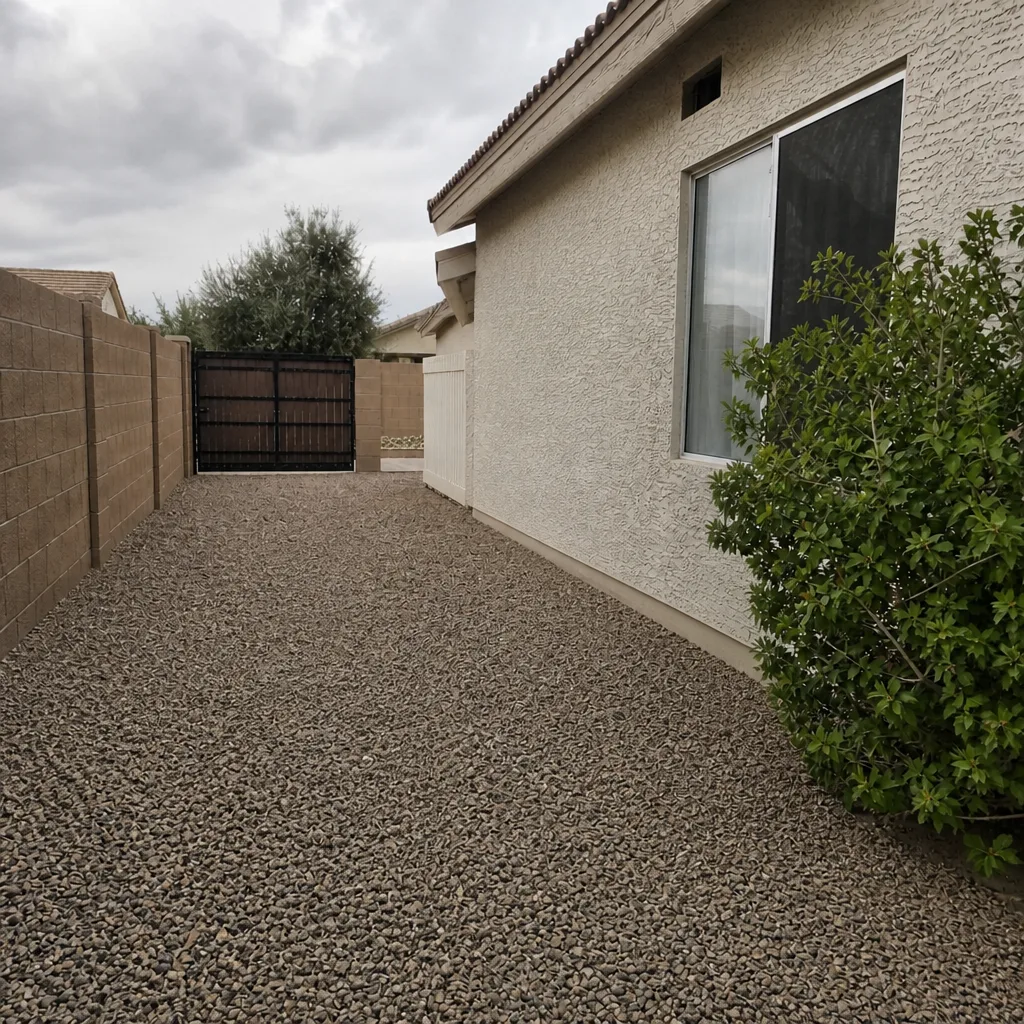
See the difference
 Before
 After
 Before
 After
 Before
 After
When to Call a Professional
Some duct issues are obvious. If you’re seeing visible dust blowing from supply vents when the system starts, or a musty smell that won’t go away, or filters that load up in half the expected time, the system needs an inspection. If your dryer is running hot or taking two cycles to dry a load, that’s the vent. If a remodel, a rodent problem, or a home purchase put you in a position where you don’t know what’s in the ducts, that’s a good time to look. We stay in scope: air duct cleaning, dryer vent cleaning, and duct repair, with the professional-grade equipment to do all three properly. Duct Cleaning Yuma offers free estimates in Yuma – call (888) 871-1789. We answer 24/7. Fast dispatch from 7am to 7pm, Sunday through Friday.
Frequently Asked Questions
Pricing depends on the size of the system, how many runs the home has, and whether repair or a filtration upgrade is part of the job, so we quote per system rather than per vent. You’ll get one flat price for the full scope agreed before work starts. Call (888) 871-1789 for an exact quote – estimates are free.
Cheap quotes usually reflect a narrower scope or lighter equipment: supply vents only, no return plenum, no coil housing, and a shop vacuum instead of HEPA-rated extraction with containment. The low price is real, but it’s for a smaller job. Ask exactly what’s included and what equipment is used before comparing numbers. A fair comparison is scope-to-scope, not price-to-price. Call (888) 871-1789 to go through what a full-pathway cleaning covers in your home.
The most reliable check is before-and-after video inspection footage of your own ductwork, including the return plenum and a representative supply run. We make that footage part of the job and walk homeowners through it. If a provider can’t show you the inside of your own system after the work, that’s the answer to the question. Call (888) 871-1789 to schedule an estimate.
There’s no fixed interval that fits every home. Because Yuma systems run far more hours per year than systems in cooler climates, national guidelines tend to understate the need, and the right schedule comes from inspecting the return, plenum, coil, and drain pan. A post-monsoon check is a sensible habit. Call (888) 871-1789 to book an inspection.
It can be, if the coil and drain pan have a dust film that stays wet during the humid months. Yuma ducts stay dry most of the year, but July through September brings enough humidity to turn that film into a growth surface, and a musty smell at startup is the usual sign. Cleaning the coil housing and pan after the wet season addresses it. Call (888) 871-1789 to have the system checked.
Cleaning is the right answer when the ductwork is intact and the issue is accumulation. Repair is the right answer when inspection finds disconnected joints, sagging runs, crushed sections, or torn jackets – and in Yuma’s hot attics those are common. We handle both in the same visit, so you don’t need a second contractor. Call (888) 871-1789 and we’ll tell you which one you’re looking at.
The Bottom Line
Yuma’s duct contamination pattern is shaped by heavy runtime, fine alkaline desert dust, and a monsoon season that turns a dry duct system into a potentially damp one. A real cleaning follows the full pathway – return plenum, coil housing, drain pan, supply runs, and the dryer vent – with professional-grade agitation, HEPA extraction, and containment. The equipment matters, the scope matters, and before-and-after video is how you verify the work was done. For a free estimate on air duct cleaning, dryer vent cleaning, or duct repair in Yuma, call Duct Cleaning Yuma at (888) 871-1789. We answer 24/7. Fast dispatch from 7am to 7pm, Sunday through Friday.
Written by the team at Duct Cleaning Yuma.