
Last updated November 15, 2026
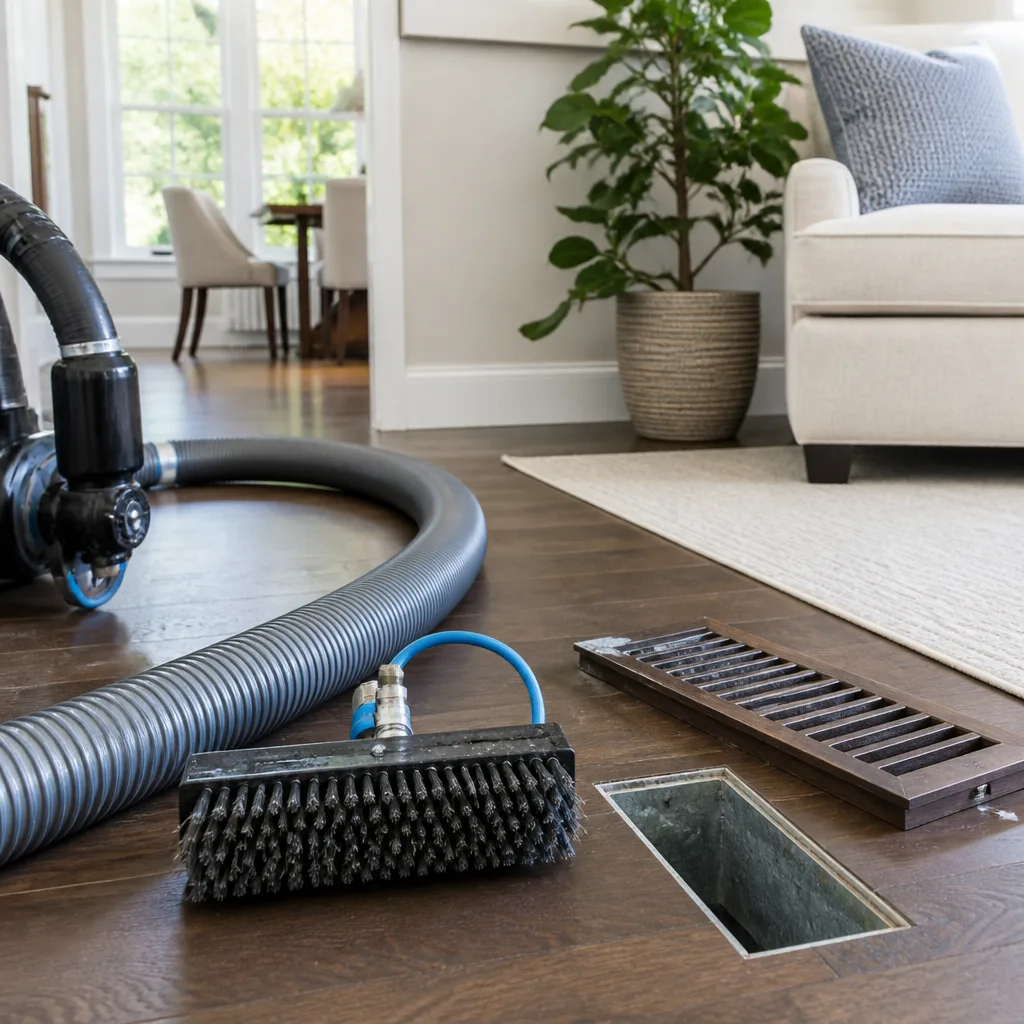 Whole-home duct cleaning
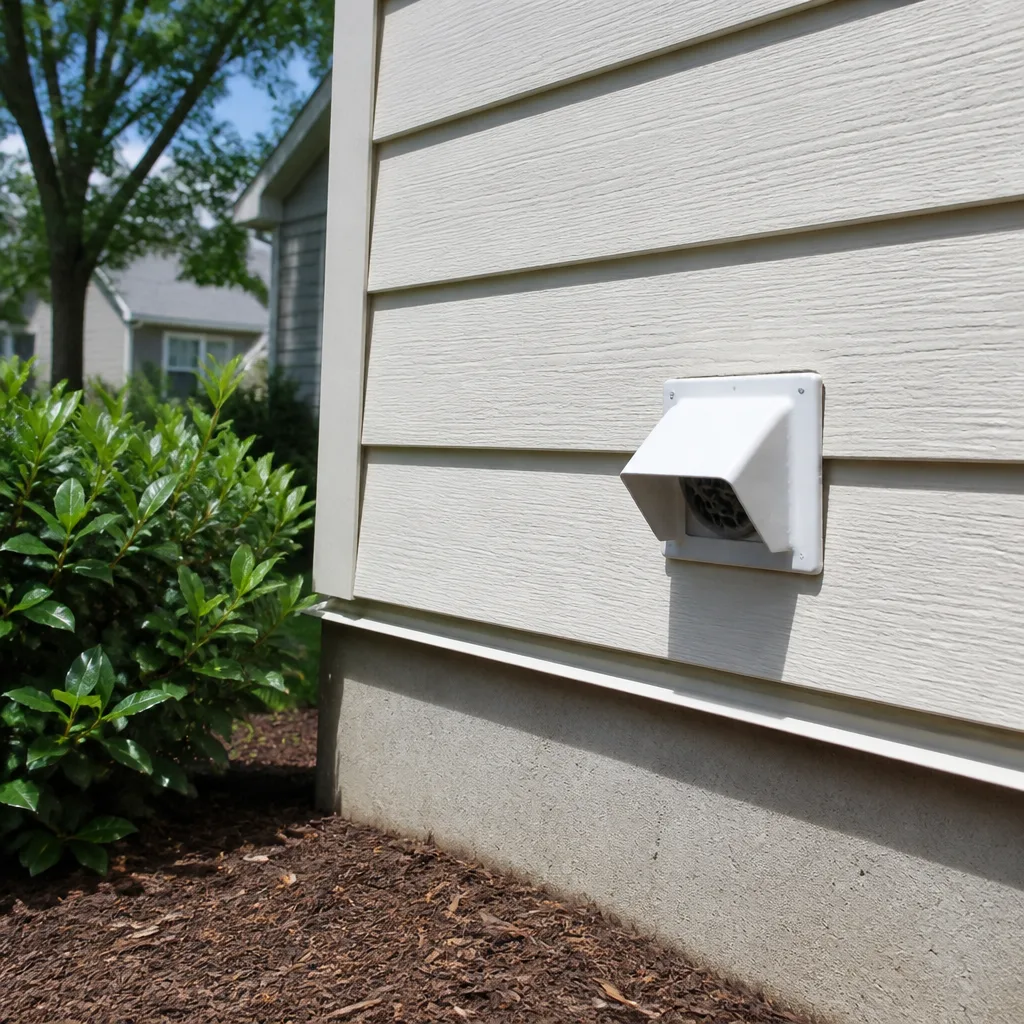 Dryer vent cleaning
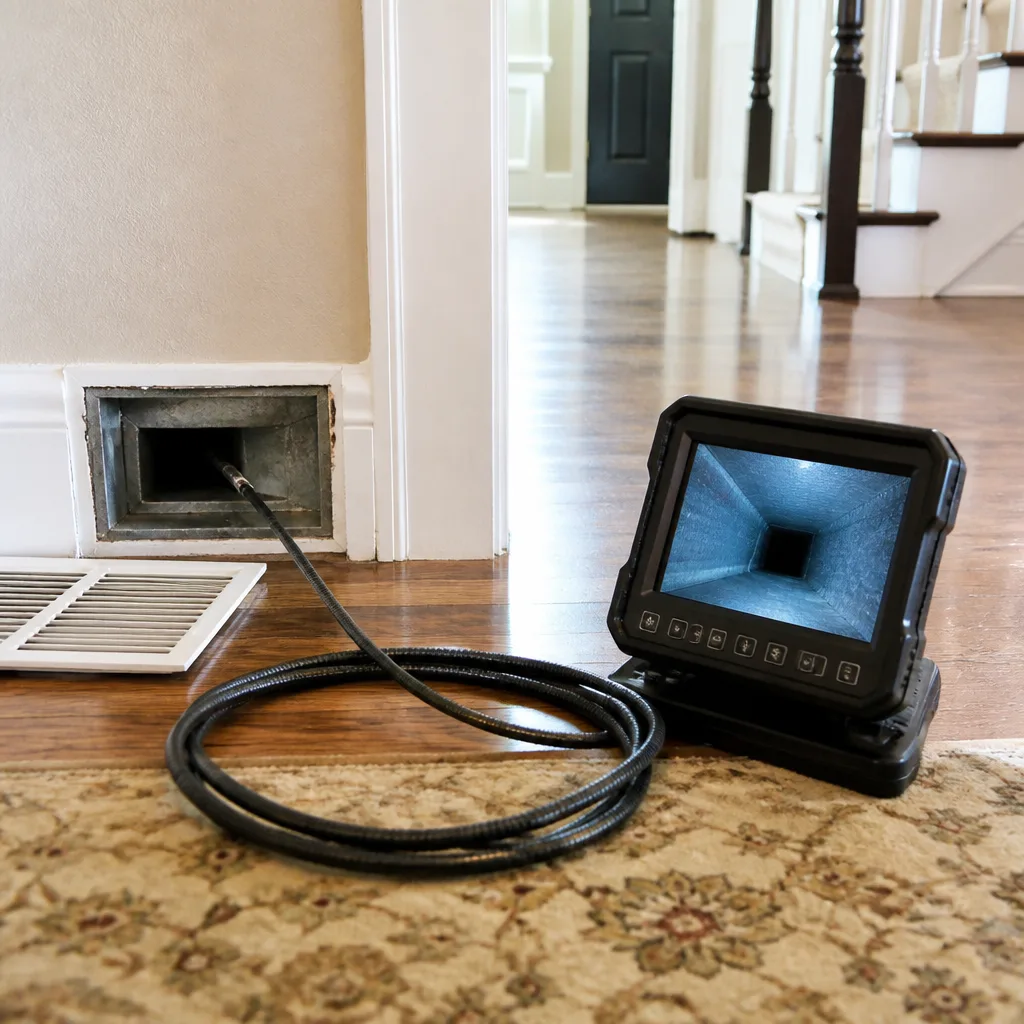 Camera inspection
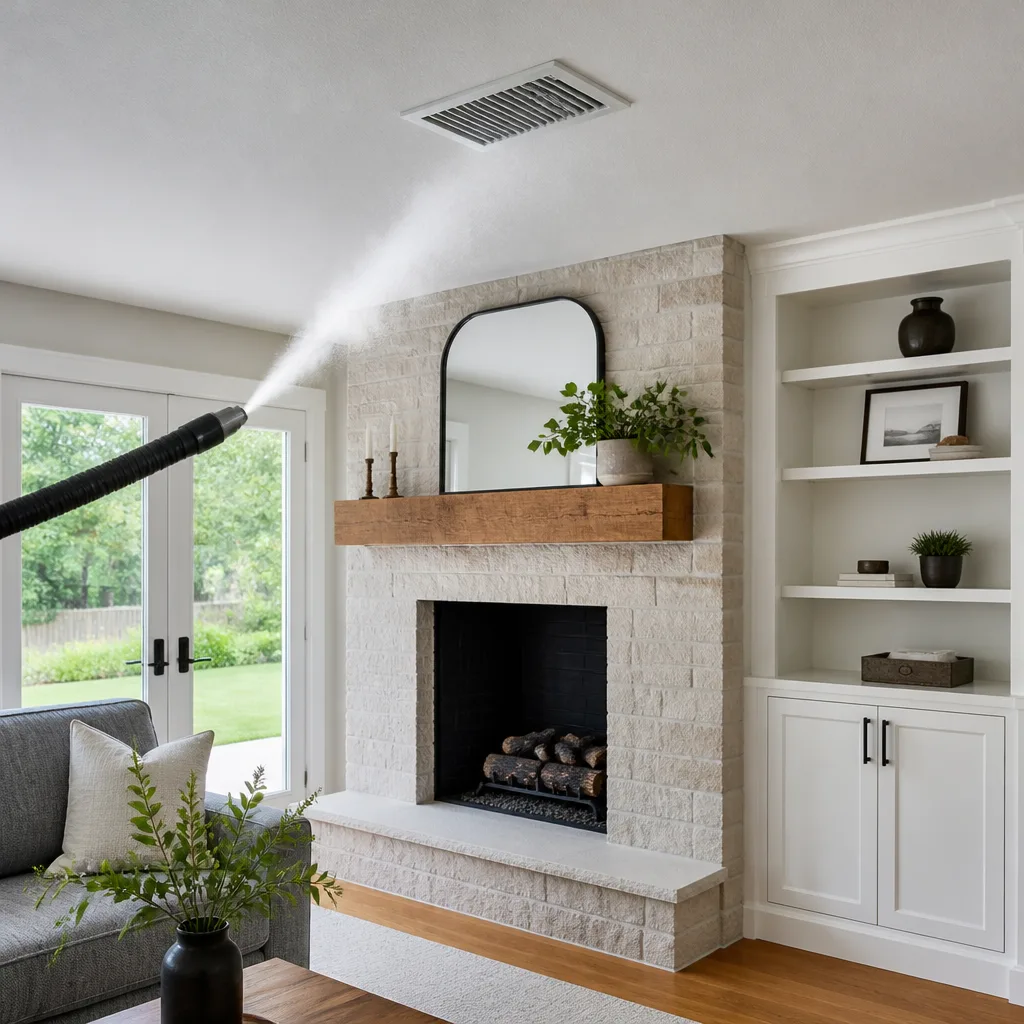 Sanitizing & deodorizing
Whole-system duct and dryer vent check with before-and-after photos - you see exactly what came out of your vents
That "$99 whole-house special" is a bait ad - the real number appears once they are in your hallway, or the "clean" is a shop-vac at the register. We photograph the inside of your ducts before and after instead.
DIY vs Professional Air Duct Cleaning: The Yuma Homeowner’s Decision Guide
Most homeowners assume a shop vacuum and a Saturday afternoon will get their ducts clean. The number that should change that assumption is 150. A consumer-grade shop vacuum produces roughly 150 CFM of suction. Professional duct cleaning equipment runs at 2,000 to 4,000 CFM. In a 2,500-square-foot Yuma home with long supply runs pushing air across a hot attic, that gap determines whether debris leaves the system or just gets stirred and resettled into the rooms you live in. This guide covers what DIY cleaning can honestly accomplish, where it goes wrong in Yuma specifically, what the real cost comparison looks like, and how to decide which path fits your home.
Quick Answer
DIY air duct cleaning can handle surface work – washing register covers, vacuuming accessible grilles, and changing filters – but it cannot generate the negative air pressure needed to actually extract debris from the duct system. In Yuma’s climate, where fine desert dust and monsoon-season moisture both affect duct interiors, amateur cleaning often redistributes contamination rather than removing it. Professional cleaning with containment equipment removes the debris, protects the rest of the house during the process, and catches damage that a homeowner can’t see from a register.
Styles & brands we work with
- Whole-home duct cleaning
- Dryer vent cleaning
- Camera inspection
- Sanitizing & deodorizing
Table of Contents
- The Physics of Duct Cleaning: Why CFM Is the Whole Game
- What DIY Duct Cleaning Can Legitimately Accomplish
- Yuma-Specific Risks of DIY Attempts
- The Real Cost Comparison: DIY vs Professional
- The Dryer Vent Exception
- What Professional Cleaning Actually Involves
- How to Decide for Your Home
- How Often Ducts Really Need Cleaning in Yuma
The Physics of Duct Cleaning: Why CFM Is the Whole Game
Cubic feet per minute – CFM – measures how much air a machine moves. In duct cleaning, that measurement controls everything. Debris inside a duct isn’t sitting in a neat pile waiting to be scooped up. It clings to duct walls, settles into low spots, and packs into corners. The only way to move it out is to create enough airflow through the system to lift it, carry it, and capture it before it settles somewhere else.
Here’s the problem with the shop vacuum sitting in your garage. A typical consumer unit pulls around 150 CFM at the hose. That number drops fast once you add a length of hose, a restriction, and the friction of a long duct run. By the time suction reaches the far end of a 25-foot supply line, the airflow is barely moving air, let alone dislodging compacted dust.
Professional systems solve this in two ways at once:
- High-volume extraction: Rotobrush and Nikro systems move 2,000 to 4,000 CFM, enough to lift debris along the whole length of a run.
- Mechanical agitation: Rotary brushes and air whips actively scrub the duct walls, breaking the bond between debris and metal or flex liner so the airflow can carry it away.
Negative air pressure – running a HEPA vacuum at one end of the system while agitating from the other – turns the entire duct network into a one-way corridor. Air only flows toward the vacuum, so debris travels out instead of sideways. Abatement Technologies air scrubbers and negative-air equipment, the same tools used in professional remediation, keep dislodged particles contained during the process rather than letting them drift into living spaces. We’ve watched enough Yuma homes get “cleaned” by a shop vacuum to know the difference is visible on the first return grille.
The short version: you can make a duct look cleaner from the register with consumer tools. You can’t pull years of compacted desert dust out of a long supply run without professional airflow. For a deeper look at how professional cleaning is approached, see our air duct cleaning service page.
What DIY Duct Cleaning Can Legitimately Accomplish
We don’t tell people their own efforts are worthless, because parts of the job genuinely belong to the homeowner. The line falls at the register, not inside the ductwork.
Here’s what you can realistically do yourself, and do well:
- Wash register covers and return grilles. Pop them off, wash in warm soapy water, dry fully, and reinstall. A greasy or dust-caked grille affects airflow and looks worse than the ducts behind it.
- Vacuum the accessible plenum area behind grilles. A vacuum with a brush attachment can reach what’s visible in the first few inches of duct at the register boot. Clean what you can see and stop there.
- Replace filters on schedule. In Yuma, that means monthly during windy spring months and far more often than the “every three months” advice that circulates nationally. A clogged filter strains the blower and lets dust bypass into the system.
- Keep the return air path clear. Furniture, boxes, and rugs pressed against a return grille restrict airflow and pull dust into the opening.
What consumer tools cannot do:
- Scrub the full interior surface of a duct run with mechanical agitation
- Maintain negative pressure across the whole system during cleaning
- Extract debris from long runs, elbows, or the plenum above the air handler
- Inspect for collapsed flex duct, disconnected joints, or rodent entry inside the system
- Remove biological growth at the evaporator coil housing without containment
The honest DIY zone is register-and-filter maintenance. Once you’re past the grille, you need airflow and equipment. Our Duct Cleaning Yuma page covers what the professional version of this work looks like in practice.
Yuma-Specific Risks of DIY Attempts
Yuma’s climate makes the duct environment harder on equipment than most of the country. Three specific factors raise the risk of a DIY attempt going wrong here.
Compacted caliche dust
The fine mineral dust that coats everything in Yuma doesn’t behave like household lint. It’s abrasive, it packs tightly, and once it settles in a duct with any moisture it hardens. A shop vacuum agitates the surface of that layer without removing it, which loads the air stream with dust the moment the system turns back on. If you’ve ever run a vacuum over dust while an air handler is running, you already know what happens next.
Monsoon-season biological growth
Yuma winters are mild, but the summer monsoon season brings bursts of humidity that push moisture into cooling coil housings and the duct sections directly downstream. That’s where mold and biological growth tend to develop. Disturbing that growth with a consumer vacuum – without HEPA filtration or negative-air containment – sends spores into the supply system and back into the rooms. Microscopic biology is not something you manage with a shop vacuum.
160°F attic temperatures and degraded flex duct
Attics in Yuma regularly reach 160°F or higher in summer. That heat ages flex duct. The outer jacket becomes brittle, the inner liner loses integrity, and sections can sag or partially collapse. When a homeowner pushes a brush through degraded flex duct, the jacket tears, the liner tears, and insulation material breaks free into the air stream. It’s a repair job the homeowner just created. In our experience, more Yuma homes need duct repair discovered during cleaning than homeowners expect.
Missed structural problems
DIY cleaning can’t identify a disconnected joint inside a wall cavity, a crushed duct run in the attic, or a return that’s pulling attic air. Those are repair items, and they matter more than the dust. A system leaking hot attic air into your supply ducts offsets the cleaning effort entirely. Damage found during professional cleaning can be repaired in the same visit rather than left as a note on a clipboard.
The Real Cost Comparison: DIY vs Professional
The DIY pitch usually compares a shop vacuum you already own to a professional invoice. That’s not the whole equation. Here’s what an honest comparison looks like in Yuma.
The DIY side has real costs that don’t show up on the price tag:
- Equipment purchase or rental: a shop vacuum with HEPA filtration runs into real money, and rentals add up by the day
- Consumables: filter cartridges, hoses, brushes, and grille-fastener replacements
- Time: a room-by-room attempt in a 2,500-square-foot home eats a full day, sometimes more
- The do-over: incomplete cleaning frequently leads to a professional call anyway, so the DIY cost is added on top
The professional side is one invoice for a complete job:
| Approach | Typical Cost Range | What You Get |
|---|---|---|
| DIY shop-vac attempt | Equipment + filters + time | Register-level cleaning, resettled debris, high probability of a follow-up call |
| Professional whole-system cleaning | Quoted per job, set in a written estimate | Full negative-pressure extraction, mechanical agitation, containment, before-and-after photos, repair findings |
| Professional + duct repair | Quoted per job, set in a written estimate | Cleaning plus repair of degraded flex duct or disconnected joints, in the same visit |
We don’t publish a per-vent price and neither should anyone else you’re considering. Per-vent pricing encourages a fast surface clean on cheap-to-reach vents and an upsell on everything else. A flat price per system, agreed before work starts, is what you should ask for from any contractor in Yuma. Compare a few estimates side by side, and be wary of any quote that promises a very low figure without looking at the system first.
Read the estimate carefully. Ask whether it covers return ducts as well as supplies. Ask whether containment equipment is part of the job or an add-on. Those two questions separate equipment-serious quotes from the rest.
The Dryer Vent Exception
Dryer vent cleaning is the one part of the air pathway where homeowner maintenance is both feasible and genuinely useful between professional services. It’s also a fire-safety issue, which puts it in a different category from duct cleaning.
Dryer vents are short, straight, and accessible. Lint accumulation is visible, and a homeowner can clear it with a few purpose-built tools. What you want:
- A dryer vent brush kit sized to your duct diameter, typically 4 inches for residential flex or rigid pipe
- Flexible rods long enough to reach the full vent run, including any transition elbows
- A shop vacuum to pull loosened lint out from both ends – a legitimate use of consumer equipment
- Safety goggles and a dust mask – lint clouds are fine to look at, less fine to breathe
Here’s where to stop and call someone. If the vent run is long, routes through an attic or wall cavity with multiple elbows, or ends in a roof cap you can’t safely reach, the DIY kit won’t get a clean result. Compressed lint that has packed hard against a screen or flap is stubborn. If you have any doubt about the terminal end of the run, professional cleaning gets it right.
For Yuma homeowners with a roof-vented dryer, or a vent that runs more than ten feet with elbows, calling for dryer vent cleaning is the safer call – and a professional can check the flapper, cap, and vent sealing while they’re there. Between professional cleanings, the brush kit is a reasonable maintenance tool, not a replacement for a full clean.
What Professional Cleaning Actually Involves
Knowing what a real professional job looks like makes the DIY decision easier to evaluate. Here’s the sequence we walk through, and what to expect if you hire anyone in Yuma.
- System inspection first. Before any cleaning, the technician checks the air handler, coil housing, plenum, and available duct runs for damage or structural problems. Collapsed flex duct, disconnected joints, and pest entry all get identified here.
- Containment setup. Negative-air equipment and air scrubbers are positioned to capture the dislodged debris. Open registers are sealed. The whole house doesn’t need to be a dust cloud during the job – containment is the difference.
- Mechanical agitation with rotary brushes. Rotobrush rotary-brush tools scrub the duct walls from the register inward. This is where debris that’s bonded to the metal gets broken free.
- High-volume extraction. Nikro HEPA-rated vacuum equipment pulls the loosened material out of the system, with airflow only flowing toward the vacuum.
- Return-side cleaning. Supply ducts are only half the system. Return ducts and the plenum are where a lot of Yuma dust accumulates and where filter performance is actually determined.
- Post-cleaning inspection. The technician checks the entire pathway, documents the before-and-after condition with photos of your own ducts, and flags any duct repair needs.
- Filtration and air-quality upgrade. Working with Honeywell, Aprilaire, and Guardsman filtration products, the technician can recommend a filter upgrade that fits your system and your Yuma dust load.
The equipment list matters because it isn’t repurposed shop gear. Rotobrush is a purpose-built HVAC cleaning system. Nikro is HEPA-rated vacuum equipment. Abatement Technologies containment is the same standard applied in remediation work. When you’re comparing quotes, ask what equipment the contractor uses. Any answer that includes “shop vacuum with a brush” tells you the job won’t go deeper than the grille.
How to Decide for Your Home
Not every Yuma home needs professional cleaning right now. Not every home should skip it either. Use this decision framework to figure out where you land.
Reasonable to handle yourself:
- Register covers and return grilles are dusty but interior ducts have never been an issue
- Filters are being changed on schedule and the system is quiet
- You can see visible dust at a register boot but no dust streaks inside the duct
Time to call a professional:
- Visible dust puffs out of registers on startup or kicks up whenever the air handler runs
- Noticeable musty or dusty odor from any register, particularly at the start of monsoon season
- Recent renovation, drywall work, or pest activity in the home
- Unexplained allergy symptoms that get worse indoors
- Never professionally cleaned since you’ve owned the home, and the system hasn’t been inspected
- Visible duct damage in the attic, sagging flex runs, or registers that feel weak compared to others
For investors and property managers in Yuma, there’s a third factor: turnover cleaning between tenants. A system cleaned after a renter moves out protects the next tenant, catches damage before it compounds, and documents the condition of the ductwork in a way that holds up in a security deposit conversation. It’s a straightforward scheduled service, not an emergency one.
Yuma sits in one of the dustiest air environments in the country during spring and summer wind events. Homes here pick up interior dust fast, and that dust has to go somewhere. Duct cleaning is how it leaves the system rather than cycling back through the blower. If you’re comparing options, our Yuma service area page covers how we approach the region’s dust load specifically.
How Often Ducts Really Need Cleaning in Yuma
“Every three to five years” is the advice that gets repeated nationally. Yuma’s dust load justifies a different answer.
The variables that matter most:
- Dust events: spring and summer wind events deposit more fine mineral dust into return systems than in most climates. Homes near open fields, construction sites, or unpaved roadways collect it faster.
- Filter discipline: a homeowner who changes filters monthly during windy season can stretch the interval between professional cleanings. A homeowner who lets filters run two or three times past their load will need cleaning sooner.
- HVAC runtime: in Yuma, the air conditioner runs long hours for most of the year. More runtime means more air through the system, more dust captured, and faster accumulation.
- Home characteristics: pets, carpet, renovation, and open-door days all push the interval down. Duct condition matters too – degraded flex duct in a hot attic sheds material into the air stream even when it’s clean.
We don’t hand out a fixed number. We look at the system, the filters, the dust visible at the registers, and the duct condition, then set a realistic interval. For most Yuma homes, that interval is shorter than the three-to-five-year figure people expect. If you’re unsure, an inspection answers the question better than any general rule.
For older homes, or homes with attic ductwork that’s been baking in summer heat, part of the conversation is often air duct repair alongside cleaning. Cleaning a degraded system without addressing the damage wastes the cleaning effort.
Common Mistakes to Avoid
- Running the air handler while vacuuming. This is the fastest way to distribute loose debris through the whole house in one pass. If you’re vacuuming a register, the system should be off and the filter should be in place.
- Assuming a shop vacuum is enough. The airflow gap is roughly fifteen to twenty-five times lower than professional equipment. Consumer tools can’t lift what professional tools can. Be honest with yourself about which side of that gap you’re on.
- Disturbing the coil housing without containment. Monsoon-season biological growth at the evaporator coil housing is one of the riskiest items to handle without HEPA filtration and negative-air containment. It’s a job for a trained technician, not a homeowner with a mask.
- Pushing a brush through degraded flex duct. Yuma attics cook flex duct for years. Pushing rotary brushes by hand through brittle liner tears it. Once insulation is loose in the air stream, you’ve turned a cleaning into a repair.
- Treating a wall-mounted register as the whole duct. The visible few inches at the boot are the easiest part. The compacted dust lives in the long straight runs and the plenum, where a consumer vacuum doesn’t reach.
- Skipping the return side. Returns pull more dust than supplies in most Yuma homes. Cleaning only the supplies is like changing the filter on one side only.
- Ignoring the dryer vent. Lint accumulation is a fire-safety issue, not just an efficiency one. Homeowners who clean ducts regularly often forget the dryer vent is a separate system that needs its own attention.
- Accepting a per-vent quote without asking about containment. If the quote is per-vent and doesn’t mention air scrubbers, containment, or negative pressure, you’re paying for surface work. Ask what equipment is on the job before you accept.
See the difference
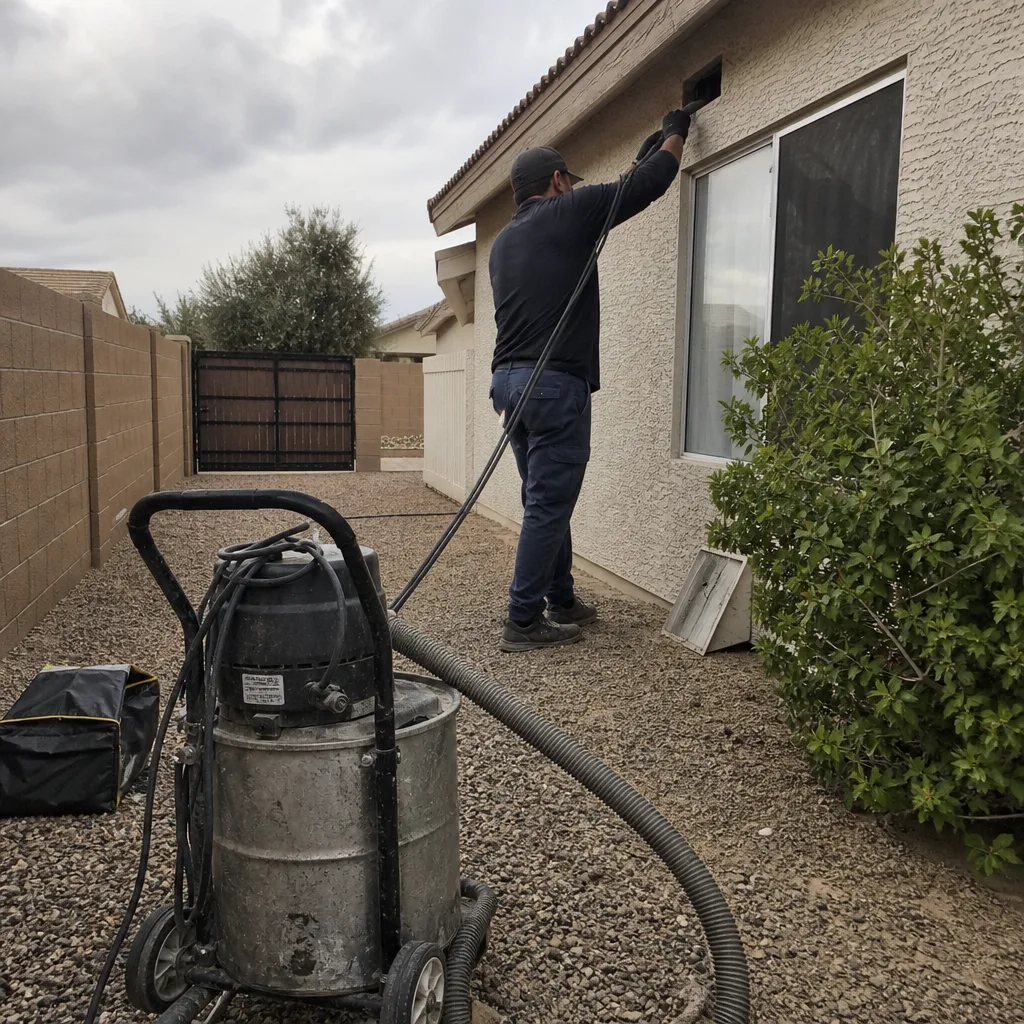 Before
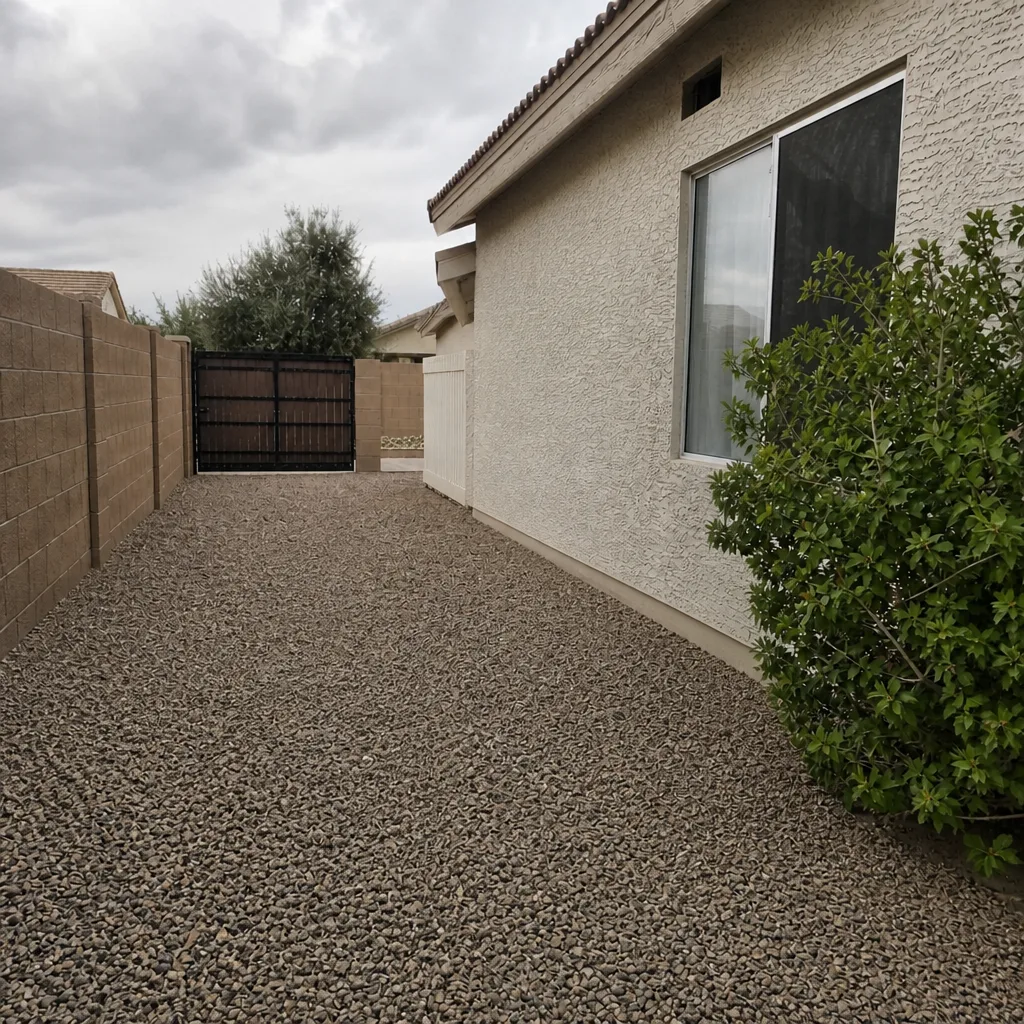 After
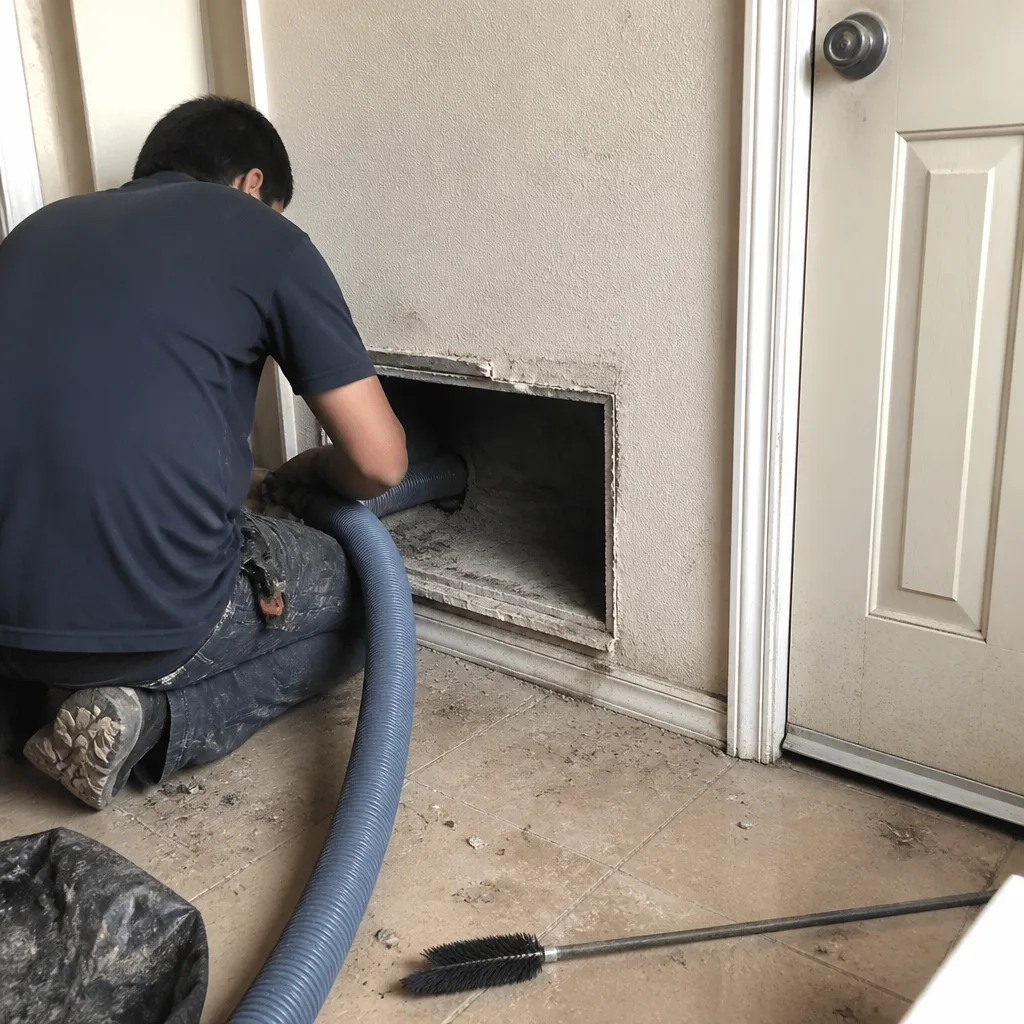 Before
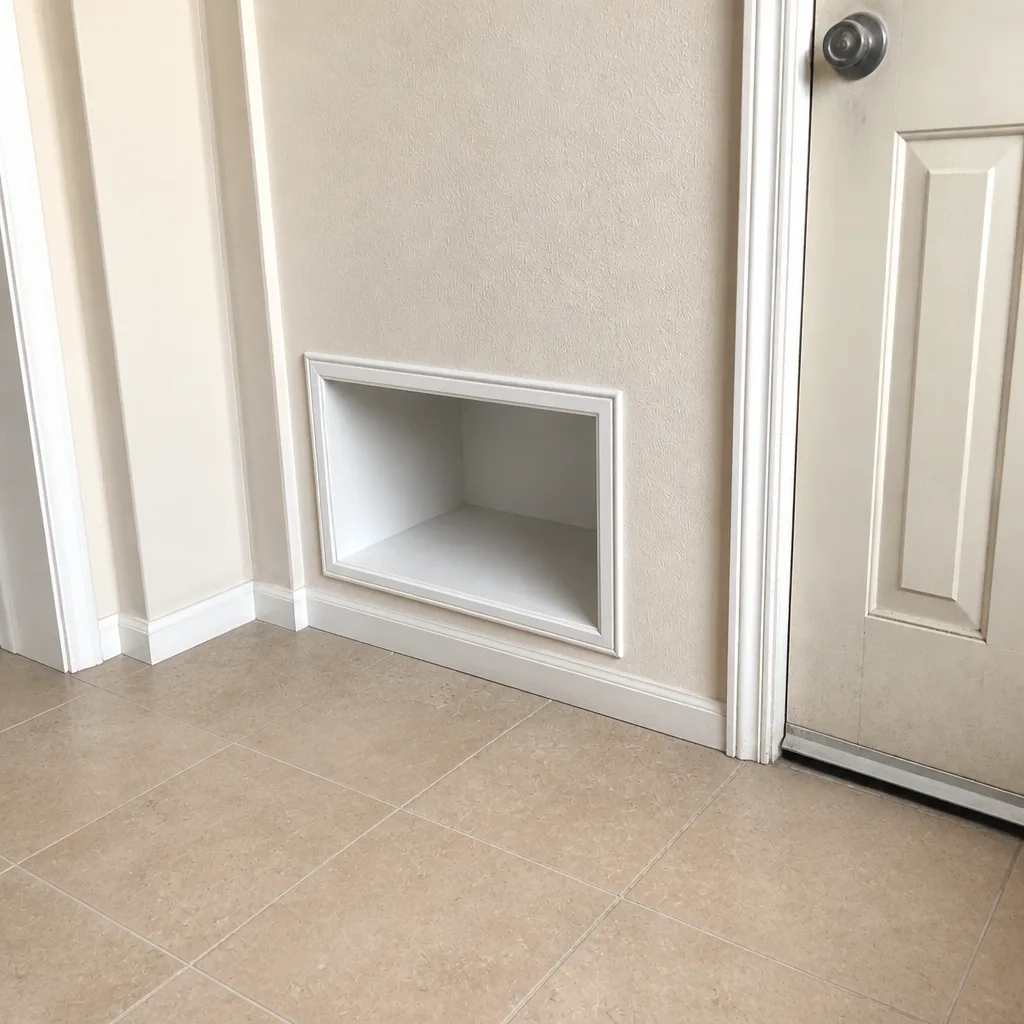 After
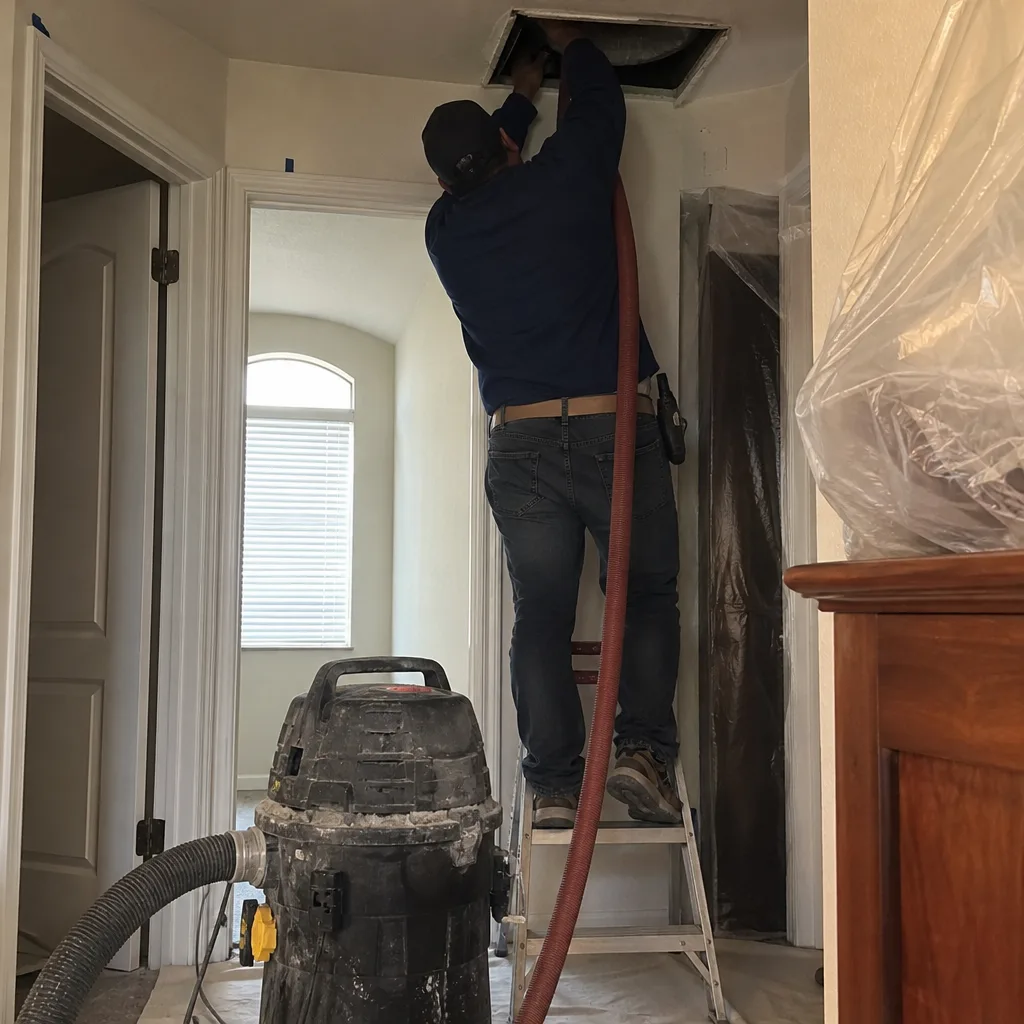 Before
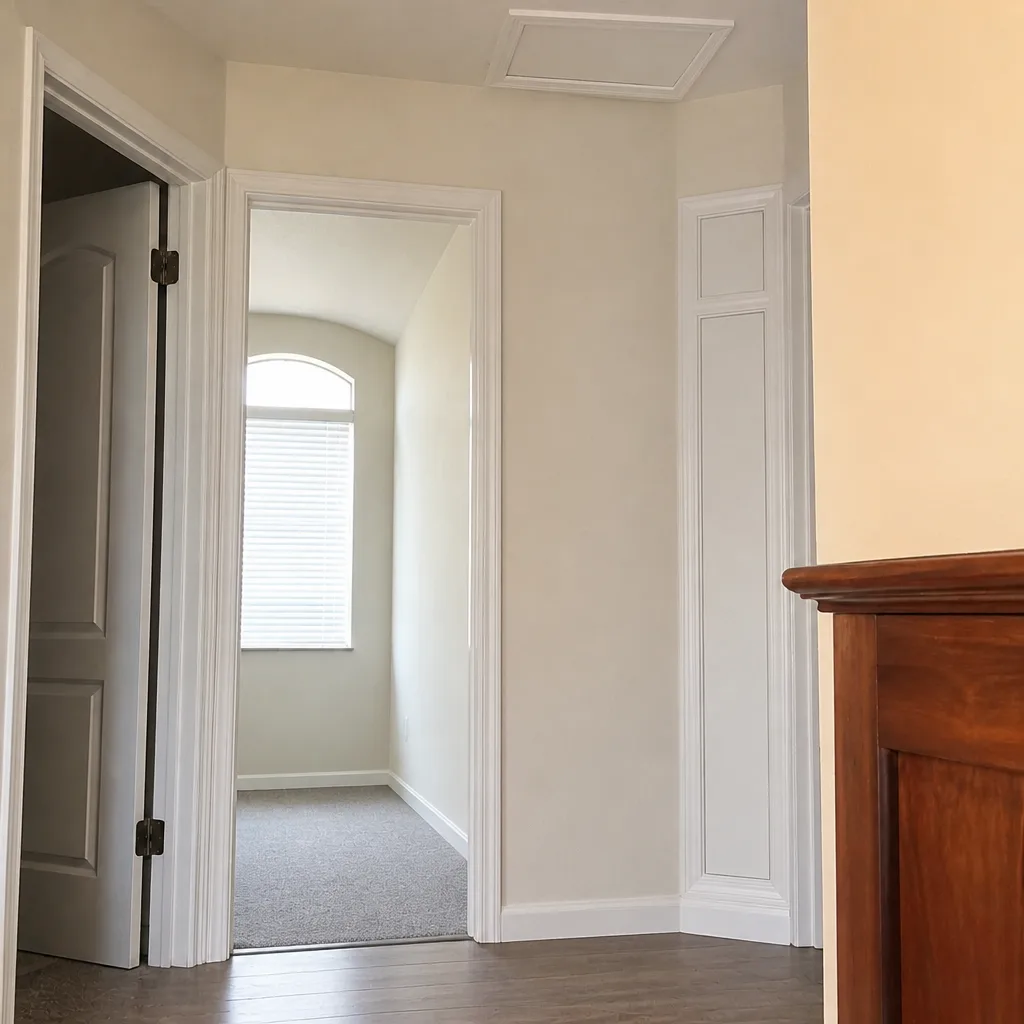 After
When to Call a Professional
Some situations sit clearly past the DIY line. If you’re seeing visible dust discharge from registers, notice a persistent musty odor that returns after filter changes, have had recent renovation or pest activity, or suspect a duct in the attic has collapsed or come apart, professional inspection is the right next step. The same goes for any home that’s never had the system inspected, especially if the ductwork has been in place through many Yuma summers.
For homeowners who want to know whether their system needs cleaning and what it would cost, the answer is a free estimate. Duct Cleaning Yuma offers free estimates in Yuma – call (888) 871-1789. We answer 24/7. Fast dispatch from 7am to 7pm, Sunday through Friday. Estimates are written, prices are set per job, and the estimate you receive before work begins is the price you pay.
Frequently Asked Questions
Professional air duct cleaning in Yuma is priced per job, not per vent, and the final number comes from a written estimate after the technician inspects your system. Per-vent pricing is a warning sign in this trade – it rewards surface work on easy-to-reach vents and hides add-on charges. Call (888) 871-1789 for a free estimate and a flat price per system before any work begins.
Low quotes usually cover less work: no containment equipment, no return-side cleaning, no mechanical agitation beyond a shop vacuum, and no documentation of what was done. The low number is real. The job it buys is just incomplete, and the homeowner often calls a second contractor within the year. Ask what equipment is on the job before you compare numbers. A per-system quote from professional equipment is worth comparing against another per-system quote from professional equipment – not against a teaser figure.
You can clean register covers, vacuum the visible boot area behind grilles, and keep filters fresh, but a shop vacuum cannot produce the CFM or negative pressure to extract debris from the actual duct system. In practice, a shop-vac attempt tends to stir settled dust and push it back into the room rather than remove it. In Yuma, that stirred dust is often fine mineral material that makes indoor air quality worse, not better.
Ask for before-and-after photos of your own ducts, not stock images. A professional cleaning includes containment setup, register sealing, mechanical agitation, and HEPA extraction – all of which can be documented. If a contractor finishes in thirty minutes with a shop vacuum and no photos, you have your answer. Call (888) 871-1789 to schedule a cleaning that documents what was found and what was removed.
More often than the national “three to five years” figure suggests, given Yuma’s dust load, long AC runtime, and spring wind events. Many Yuma homes land in a shorter interval, though the right answer depends on filter discipline, home characteristics, and duct condition. An inspection sets a real interval instead of a general rule. Call (888) 871-1789 for a free estimate and an honest read on your system’s condition.
Yes – dryer vent cleaning is the one part of the air pathway where homeowner maintenance between professional services makes sense. A dryer vent brush kit, flexible rods, and a shop vacuum clear accessible straight runs well. Where it stops making sense: long runs with multiple elbows, roof-vented dryers, or lint packed hard against a screen or flap. In those cases, professional dryer vent cleaning is safer and gets the run actually clean.
The Bottom Line
DIY duct cleaning has a legitimate place – register covers, filters, and the visible few inches behind grilles – and it’s worth doing on a regular schedule. Past the boot, the physics decide the outcome. A shop vacuum moves roughly 150 CFM; professional equipment moves 2,000 to 4,000. In Yuma’s dust, heat, and monsoon-season humidity, that gap determines whether contamination leaves the system, gets redistributed into rooms, or masks a duct problem that needs repair. Dryer vents are the exception where homeowner upkeep is genuinely useful. Ducts are not. When you’re ready for the full-pathway version of the job, call (888) 871-1789 for a free estimate. We answer 24/7. Fast dispatch from 7am to 7pm, Sunday through Friday. Prices are per job, set in a written estimate agreed before work starts.
Get a Free Estimate
Duct Cleaning Yuma handles air duct cleaning, dryer vent cleaning, and air duct repair across the Yuma area, using Rotobrush, Nikro, and Abatement Technologies equipment and working with Honeywell, Aprilaire, and Guardsman filtration products. Our technicians have up to 11 years of experience. Call (888) 871-1789 today for a written estimate – free, no obligation, and priced per system.
Written by the team at Duct Cleaning Yuma.